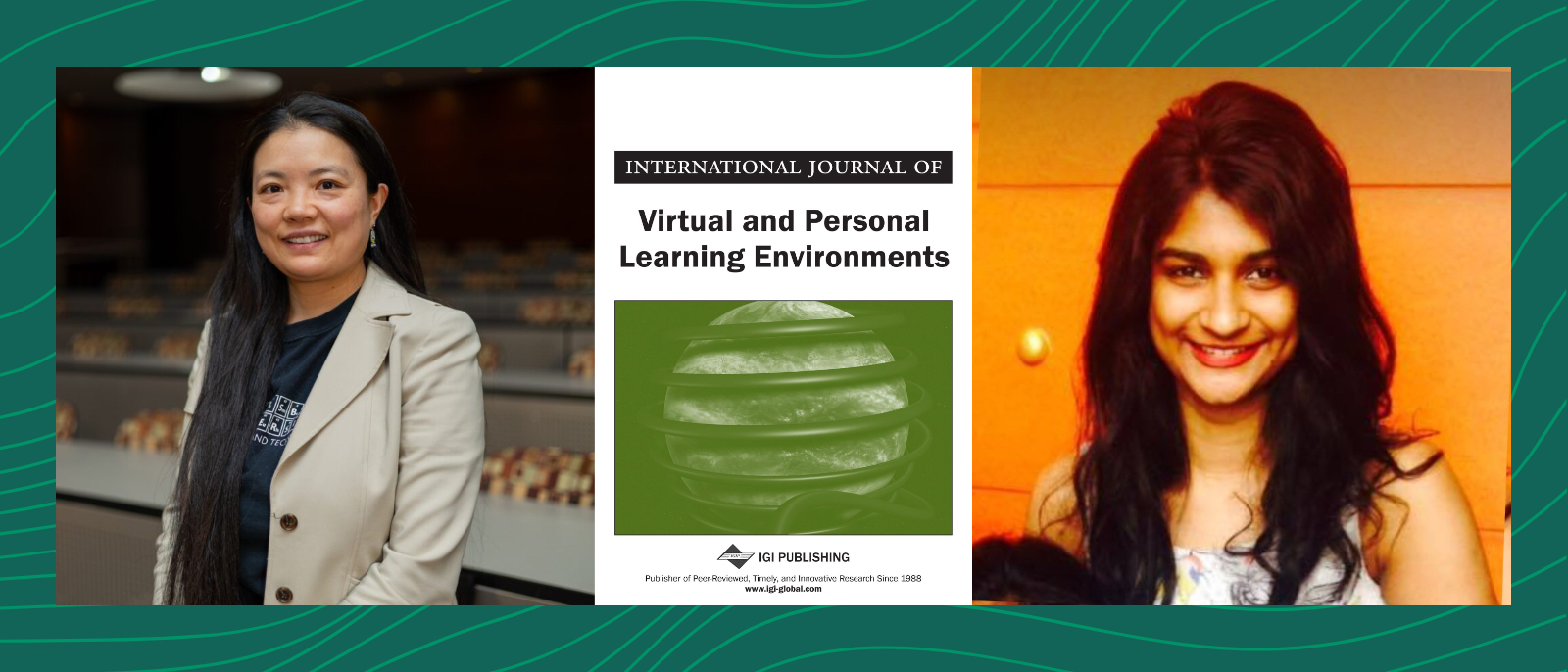
HARRISBURG, PA — Harrisburg University of Science & Technology (HU) alumna, Vaishnavi Padala ‘25, and Sa Liu, Ph.D., Assistant Professor of Interactive Media Studies, have co-authored an original paper, entitled, “Understanding Underserved Student Perceptions of Virtual Reality With Technology Acceptance Model.” It appears in Volume 15, Issue 1, of the “International Journal of Virtual and Personal Learning Environments.”
“We studied how underserved students perceive and accept virtual reality (VR) technology using the Technology Acceptance Model (TAM),” explained Dr. Liu. “We explored the influence of social interaction and the impact of a solar system-themed VR activity on students’ experiences.”
Vaishnavi added: “We applied a human-centered approach to framing our research question: brainstorming the interactions we wanted to investigate and identifying opportunities for improvement. Improving technology usability and design involves more than just the physical interaction or core functionality (e.g. buttons, navigation, etc.). It encompasses broader human experience tied to the end goal of its use, and during the activity itself, such as social interactions within the virtual spaces, engagement with educational content, learning success, and knowledge retention.”
She continued: “While there is a lot of interest in applying emerging technologies to education, we recognize that these experiences can vary significantly depending on who is using the technology, their context, prior familiarity, access, affordability, and so on.”
Key highlights of the study include:
- VR activities generally improved acceptance, with perceived enjoyment having the strongest influence.
- Students with strong social ties valued social features more but found the VR experience less enjoyable.
- The solar system VR activity significantly boosted positive sentiment, especially around enjoyment.
“These findings emphasize the need to improve VR’s social interaction features and highlight the importance of equitable access to immersive technologies in education,” noted Dr. Liu. “The study also points to opportunities for further research into VR’s impact on engagement and learning outcomes across diverse populations.”
Harrisburg University’s XR (extended reality) Task Force is working to bring augmented (AR) and virtual (VR) reality into not just the classroom but also industries critical to national competitiveness, including advanced manufacturing and defense. To learn more about how Harrisburg University is pushing AR, VR, and XR forward, start a conversation with Professors Jennifer Mowery or Matthew Rissler today.
ABOUT HARRISBURG UNIVERSITY
Harrisburg University was recognized by US News & World Report as one of the nation’s most innovative colleges for 2025. HU is accredited by the Middle States Commission on Higher Education and is a private, nonprofit university offering bachelor’s and graduate degree programs in science, technology, engineering, mathematics, nursing, and other health science fields. For additional information about HU’s affordable, demand-driven undergraduate and graduate programs, please call 717.901.5146 or email Connect@HarrisburgU.edu. Stay updated by following Harrisburg University on LinkedIn, Instagram, and Facebook.
MEDIA CONTACT
Do you have questions about this story? Interested in lining up an interview? Please reach out to Dan Wilhelm, Communications Manager for Harrisburg University of Science and Technology, with all media inquiries.
# # #