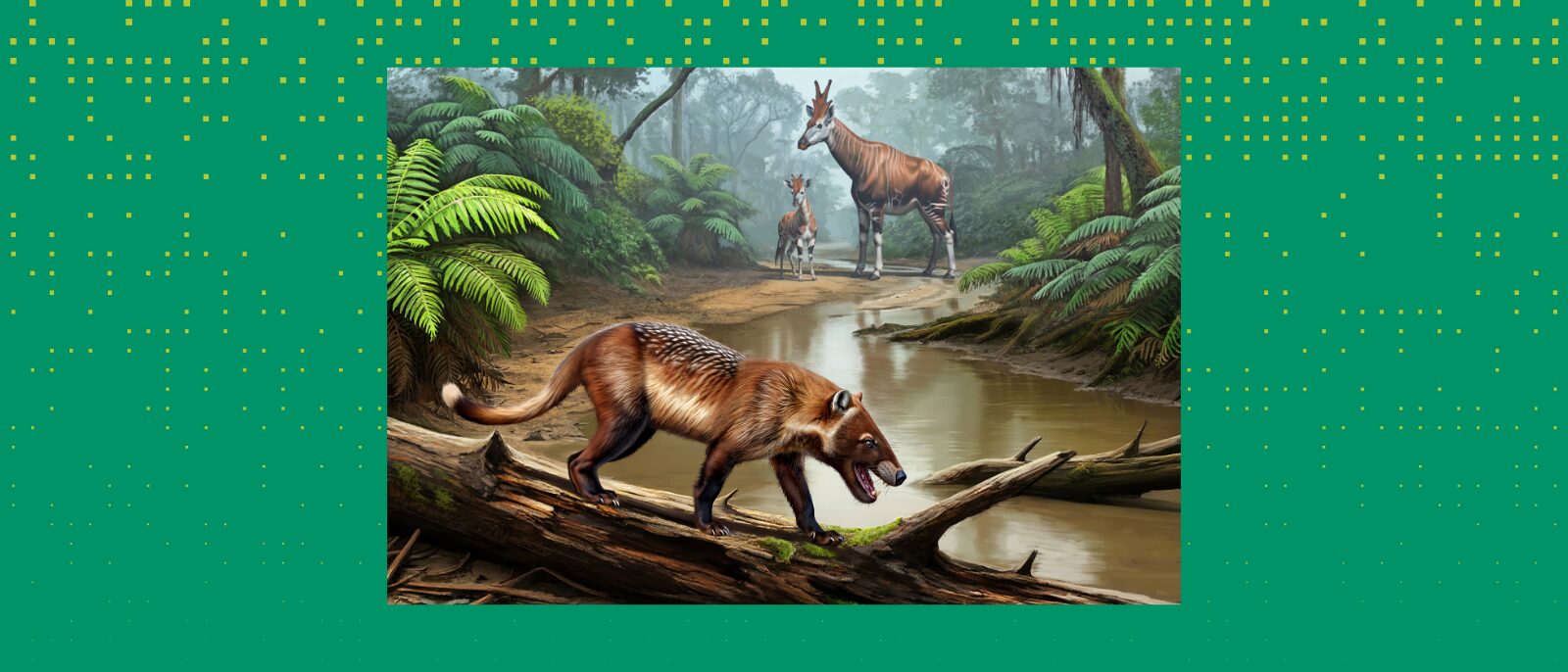
HARRISBURG, PA — A research team including Harrisburg University of Science and Technology (HU) Professor Dr. Steven Jasinski recently published a study on fossil predatory mammals from South Asia.
Dr. Jasinski, of HU’s Department of Integrated Sciences, and researchers from Quaid-i-Azam University, Islamabad; University of Okara; the University of Sialkot; the Chinese Academy of Sciences; and the University of the Punjab, Lahore, described new fossil specimens of carnivorous mammals that lived in Pakistan from around 14 to 9.5 million years ago.
The new fossils represent hyaenodonts, a group of carnivorous mammalian predators that reached large sizes, and offer important new information on the group, according to the study published in the scientific journal PalZ (Paläontologische Zeitschrift). The research was led by Dr. Khalid Mahmood of Quaid-i-Azam University, along with Dr. Sayyed Ghyour Abbas of the University of Sialkot and the Chinese Academy of Sciences, Dr. Muhammad Adeeb Babar of the University of Okara, Dr. Muhammad Akbar Khan of the University of the Punjab, Lahore, and Professor Jasinski.
The Siwaliks, or Siwalik Group, is a mountainous region in South Asia stretching through Pakistan, India, Nepal, and Bhutan. The deposits span from around 18 million years ago to about 1 million years ago and preserve the plants and animals that lived during that time. These deposits contain diverse mammalian fauna, including artiodactyls (bovids, hippopotamuses, giraffoids), perissodactyls (rhinoceroses, horses, chalicotheres), proboscideans, rodents, primates, and carnivorous mammals.
Most modern mammalian carnivores (cats, dogs, bears, and others) belong to the order Carnivora. Hyaenodonts, in the separate order Hyaenodonta, were important predators that were eventually replaced by carnivorans.
Dr. Jasinski and his co-authors focused on new hyaenodont fossils collected from Miocene sediments in Pakistan.
“Hyaenodonts were some of the most important mammalian carnivores before cats and dogs and the other mammalian predators we know today evolved and began to take over those niches,” said Dr. Jasinski, “and some of them got to incredibly large sizes.”
The researchers identified three different hyaenodonts in the studied fossil material. The first was an incredibly large species that may have reached up to 500 kg (1,100 lbs.) as a full adult — about the size of a polar bear — tentatively identified as Megistotherium or Hyainailouros. The fossils were deciduous teeth from juvenile animals that had not yet developed permanent dentition, making firm identification difficult.
Other fossil teeth were identified as Hyaenodon. While this wide-ranging genus is known from many northern continents, including North America, Europe, and Asia, these are the first specimensof the genus from this region. They are also the youngest known occurrence of the genus and may represent a distinct species, though more material is needed to confirm this. The Siwalik Hyaenodon likely weighed around 30 kg, similar in size to a small gray wolf or leopard.
The team also identified a tooth belonging to the relatively small hyaenodont Metapterodon, distinct enough from previously known material that the researchers named it a new species: Metapterodon anari. Previously known only from African fossils, the genus is now confirmed to have traveled out of Africa during the Miocene. The new species may also be one of the youngest hyaenodont fossils published to date.
“Metapterodon anari is incredibly important both for its place among similar species, but also its placement in time,” said Dr. Jasinski. “It represents one of the last hyaenodonts and gives us potential insight into a time when there was likely competition between these mammalian predators and carnivorans, which were starting to overtake them as the main terrestrial carnivorous mammals.”
Metapterodon anari reached about 15 kg, similar in size to a large red fox or coyote. The significance of these fossils lies not only in their taxonomic identifications but also in their geographic implications; they confirm important connections between Africa and Europe during the Miocene and suggest possible migration of hyaenodonts from neighboring regions such as China.
The Miocene Pakistan hyaenodonts are particularly interesting because they lived alongside carnivorans, providing data on how the two groups competed. All show features of hypercarnivores, with meat dominating their diets: a specialization that may ultimately have left them vulnerable to competitive exclusion by carnivorans.
The fossils also help researchers better understand South Asia during the Miocene, roughly 14 to 9.5 million years ago — a time of cooling global temperatures and shifting animal communities that helped lay the foundation for the ecosystems we see in the region today.
The research team hopes further collecting and study will lead to a deeper understanding of the past and its implications for the present and future. “Fossils are not just an interesting anecdote about past animals and plants; they help us understand what changes have occurred and how living things dealt with those changes,” said Dr. Jasinski. “Studying them also can help give us clues for what changes may occur in our future, and ideas as to how to deal with those changes.”
You can read the team’s paper online or email Dr. Jasinski for a PDF copy.
Dr. Jasinski has contributed to research naming several new dinosaur, mammal, and turtle species in recent years, including the ceratopsids Menefeeceratops sealeyi, Sierraceratops turneri, and Bisticeratops froeseorum; the tyrannosaurid Tyrannosaurus mcraeensis; the duck-billed dinosaur Ahshislesaurus wimani; the fossil turtles Hutchemys walkerorum and Chrysemys corniculata; and the carnivorous mammal Circamustela bhapralensis.
# # #
ABOUT HARRISBURG UNIVERSITY
Harrisburg University of Science and Technology (HU) is an independent, nonprofit university offering degrees in advanced manufacturing, engineering, robotics, nursing, cybersecurity, and other critical fields. Accredited by the Middle States Commission on Higher Education, HU serves a diverse student body through bachelor’s, master’s, and doctoral programs that link learning and research with practical applications. For information about HU’s affordable STEM degrees and professional development programs, call 717.901.5146 or email Connect@HarrisburgU.edu. Stay in the know by following Harrisburg University on LinkedIn, Instagram, and Facebook.
MEDIA CONTACT
Do you have questions about this story? Interested in lining up an interview? Please contact Dan Wilhelm, Communications Manager for Harrisburg University, at DWilhelm@HarrisburgU.edu or 717.901.5100×1724.
# # #