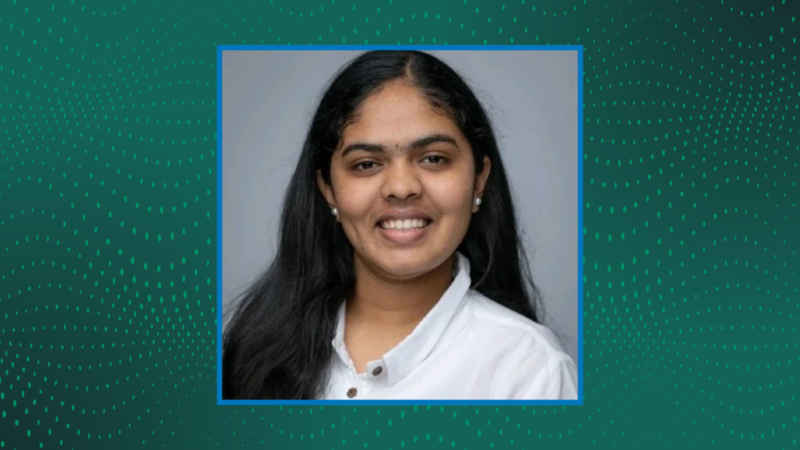
HARRISBURG, PA — Driven by curiosity and a deep belief in the power of connection, Bagus Wicaksono Ruswandi ‘25 has turned his passion for innovation and culture into a growing entrepreneurial journey.
After beginning his career in Indonesia advising emerging startups, Bagus pursued further studies at Cornell Law School, where his exposure to the vibrant ecosystem of Cornell Tech sparked a lasting fascination with innovation and human-centered design. Years later, that spark would evolve into something tangible: a growing food-experience startup called Studio Bumi.
A recent graduate of the Master of Science in Techpreneurship program at Harrisburg University of Science & Technology (HU), Bagus has been accepted into the TiE Silicon Valley University Mentorship Program, a global initiative that pairs university innovators with seasoned industry mentors. For Bagus, it marks an exciting new chapter: one that will help him refine and scale Studio Bumi – a startup rooted in community, culture, and care.
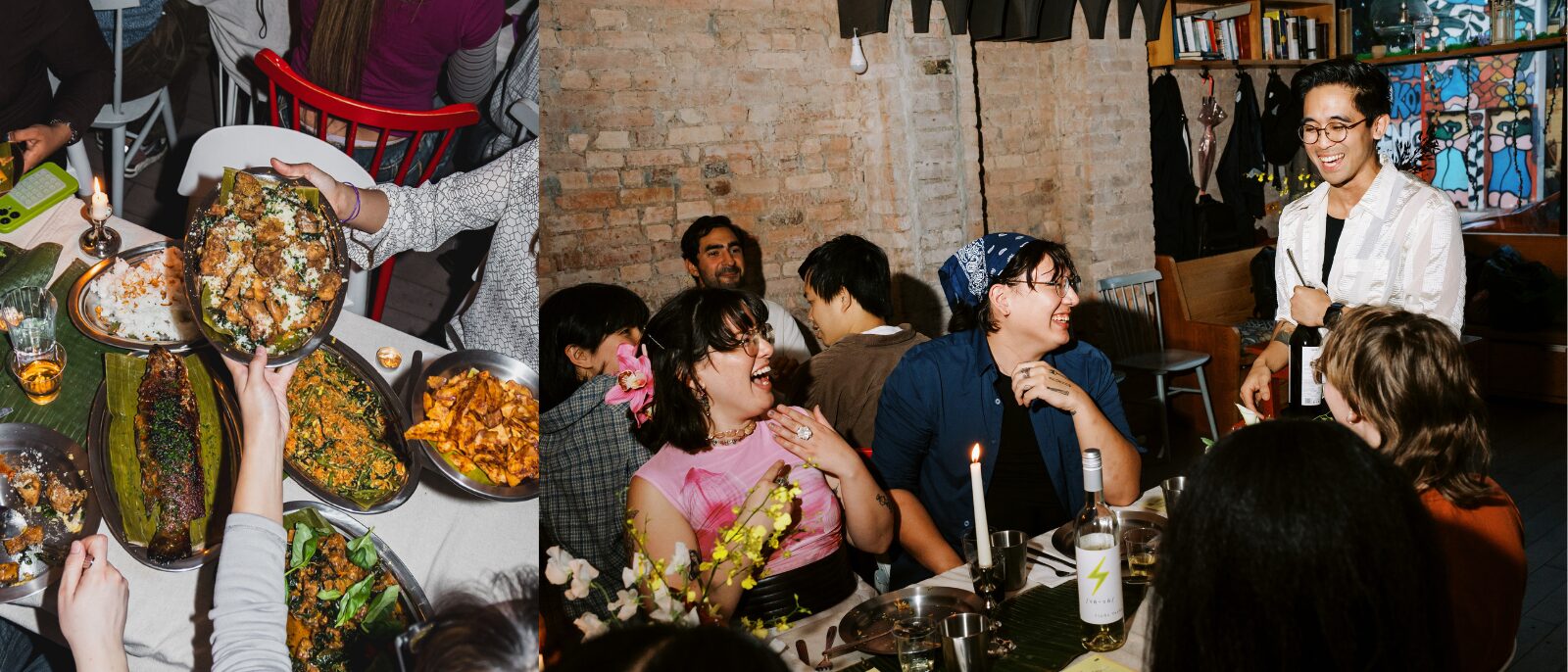
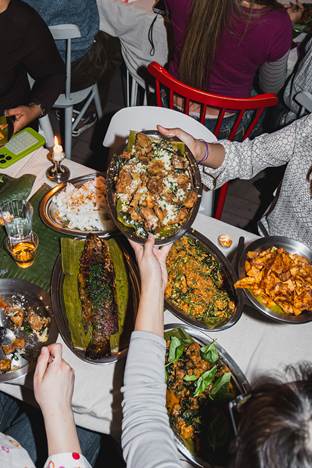
Studio Bumi began as a simple idea born from Bagus’s love of cooking and a desire to bring people together. What started as small gatherings among friends has evolved into a growing movement to “build belonging through food, one table at a time.”
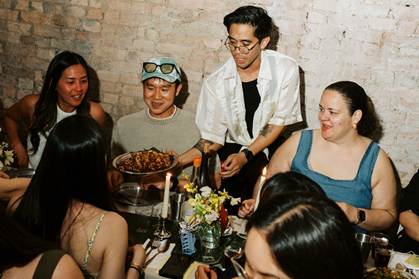
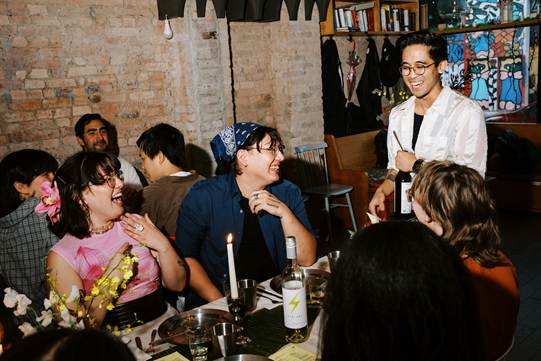
With each communal dinner, Studio Bumi designs spaces where strangers can connect over conversation, shared stories, and underrepresented cuisines. It’s a venture shaped by Bagus’s personal journey, and one that continues to grow through the lessons he’s carried from law, to tech, to entrepreneurship.
Bagus discusses his journey to Harrisburg University, how HU’s Techpreneurship program shaped him as a founder, and his proudest moments and future vision for Studio Bumi.
Can you tell us about your background before coming to HU?
Before joining Harrisburg University, I studied law in Indonesia and started my career with Allen & Overy (now A&O Shearman), where I advised a number of emerging growth startups. That experience shaped the way I think about business and innovation, and it opened my eyes to how much energy and creativity sits within the startup world. It also set me on the path to Cornell Law School, where I had the privilege of studying within the ecosystem of Cornell Tech.
That was really a turning point for me! Not only did I get to learn from incredible professors and peers (oh, my friends, they were incredible), but I was also surrounded by entrepreneurship in action: people building intentionally and putting human-first design at the center of their ventures. Even though I didn’t start building something of my own at that stage, the spark was definitely lit.
After graduating, I joined Odell Girton Siegel, a boutique law firm in New York City, where I continued to work closely with startups and deepened my understanding of the ecosystem, all while carrying that spark with me.
What motivated you to study Techpreneurship at Harrisburg University?
During my time in New York, I found myself reigniting a love for cooking while also being surrounded by people who were passionate about building communities. Around the same time, I was let go from my job, which made me pause and ask, “What’s next?” I started cooking for friends and experimenting with food projects as a way to bring people together, and that eventually became the early foundation for Studio Bumi.
At the same time, I knew I wanted more structure around building and testing ideas. I’ve always had a strong background in the non-technical side of things, but I felt I needed to immerse myself in an environment that combined business, technology, and entrepreneurship in a hands-on way.
The Techpreneurship program at Harrisburg University stood out because it gave me exactly that: a place to move from ideas to execution while learning from faculties who understood what it takes to create something new and actually take it further and ship it out. I knew I wanted help (and let’s be honest, I needed it). It felt like the right setting to push forward my vision for Studio Bumi and to grow as a first-time founder!
Were there any specific courses, professors, or projects that helped you develop the skills you’re using as a founder?
The program has been full of moments that reminded me why I enjoy building, but a few stand out. Early on, Professor Manoj Fernando led a series of classes that guided us through ideation and building, and it gave me the push to take my ideas more seriously. This time, I knew I was working on something I truly cared about, which made the process even more rewarding.
On top of that, the immersive applied-research course we did in the second year of the program with Professor Pavlo Buryi was another turning point. I realized that if I wanted to build something that puts people first, I needed to run proper research and treat that as the backbone of Studio Bumi. Having the chance to approach it as a “class” gave me the structure I needed to keep making progress. I set a personal challenge to surprise myself every week with something new to show, and that habit kept me moving forward. It was challenging, but it was also a genuinely good time, and it helped me build confidence in both the project and myself.
Can you tell us the story behind Studio Bumi? What is the goal of Studio Bumi and what inspired you to start?
Studio Bumi began as a way to bring people together through food. Since our launch in December 2023, we’ve grown from a weekly lunch set delivery into a multi-format food experience studio rooted in connection, culture, and care.
Our vision is to build belonging through food, one table at a time. We believe that sharing a meal is one of the most approachable and powerful antidotes to loneliness: a timeless ritual that can turn strangers into friends. Our name, “Bumi,” which means “Earth” in Indonesian, reflects a grounding in community and shared humanity. At our core, we are a food-experience studio designing spaces of connection within the loneliness economy.
Our approach has two parts. First, we create curated communal dining experiences. Second, we’re building a scalable hosting system that allows those experiences to spread. Every gathering is intentionally crafted to spark conversation, empathy, and belonging. Guests don’t just enjoy a meal; they often return as volunteer hosts, helping to cultivate the community for others. This way, each event isn’t just a one-time dinner, but a seed that grows into future gatherings.
Food is at the center of all of this because it is a universal equalizer. It breaks down social barriers, creates comfort, and gives people a structure for connection. Research backs this up (a lot of which I did as part of my program): dining together increases happiness, trust, and social bonding.
At Studio Bumi, we go beyond serving meals. We design experiences around the meal. For example, every dinner features a “Question of the Day” placed at each table. These are simple prompts that turn small talk into real dialogue. We’ve seen complete strangers leave with laughter, stories, and friendships that carry on long after the night ends.
Our bigger vision is to make communal eating feel cool (and normal) again. Two generations ago, family dinners and neighborhood potlucks were part of everyday life. Today, many young adults eat alone or in front of a screen. We want to change that by building the infrastructure that makes shared meals easy and exciting again, through access to venues and kitchens, through networks of hosts and facilitators, and eventually through digital tools that help connect people. We like to say we’re making belonging scalable, because at its heart, Studio Bumi is about intentionally designing for connection and using food as the medium.
Your mission touches on underrepresented cuisines, friendship, and loneliness. Why are those themes important to you?
They are important because they are deeply personal. Moving far from home taught me what loneliness feels like, and food became my way of bridging that gap. I also believe that underrepresented cuisines carry so much history, culture, and story. Sharing those dishes naturally sparks curiosity and opens doors to meaningful conversations. Friendship is the thread that ties it all together. When people sit down to eat and share stories, barriers come down and a sense of belonging starts to form. Studio Bumi exists at that intersection: to make space for people to feel seen, to celebrate flavors that are often overlooked, and to remind us that sharing food is one of the simplest, most human ways to connect.
What has been your proudest moment with Studio Bumi so far?
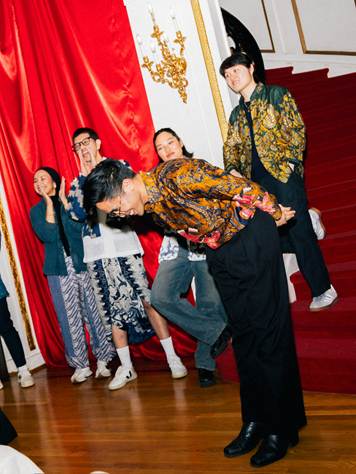
One of my proudest moments was being invited by the Indonesian Consulate to host two special public dinners. It was such an honor to bring our vision to that stage and share it with a wider community.
More recently, I am also proud of launching “Just Friends,” a new series of pop-up food events led by people who have grown with us. These are friends who started as dinner guests, later helped behind the scenes, and are now stepping up to host their own nights. Seeing that kind of ripple effect, where Studio Bumi creates not just connections but new leaders and hosts, feels incredibly rewarding.
Looking ahead, what is your vision for Studio Bumi in the next 3–5 years?
I see Studio Bumi growing into a food-experience company that operates in multiple cities, not just New York. Communal dinners will remain our heart, but we will also expand through partnerships with companies, cultural institutions, and communities that want to use food as a way to connect people.
Beyond individual events, our long-term vision is infrastructural: to build the systems that make it easy to gather, to host, and to feel part of something bigger. Also, maybe a physical studio! If we can make communal eating feel natural and exciting again, and if we can give people the tools to make that possible in their own circles, then we’ll know we’re on the right track.
What advice would you give other students who want to become entrepreneurs?
Start small and test your ideas early. You don’t need to wait until everything is perfect; progress comes from trying, learning, and adjusting along the way. Find mentors and peers who will challenge you and, most importantly, help you see beyond your own perspective, because it’s easy to get stuck in your own head. My north star has always been, “Do it day by day, enjoy your small wins, and care about your mission.” You have to care.
ABOUT HARRISBURG UNIVERSITY
Harrisburg University was recently recognized by US News & World Report as one of the nation’s most innovative colleges. HU is accredited by the Middle States Commission on Higher Education and is a private, nonprofit university offering bachelor’s and graduate degree programs in science, technology, engineering, mathematics, nursing, and other health science fields. For additional information about HU’s affordable, demand-driven undergraduate and graduate programs, please call 717.901.5146 or email Connect@HarrisburgU.edu. Stay updated by following Harrisburg University on LinkedIn, Instagram, and Facebook.
# # #