HARRISBURG, PA — At Harrisburg University of Science & Technology (HU), students take center stage. Our Student Spotlight shines a light on the internships, career outcomes, published research, and other ways our learners are demonstrating their skills in science, business, technology, and more – and making an impact in Central Pennsylvania and beyond.
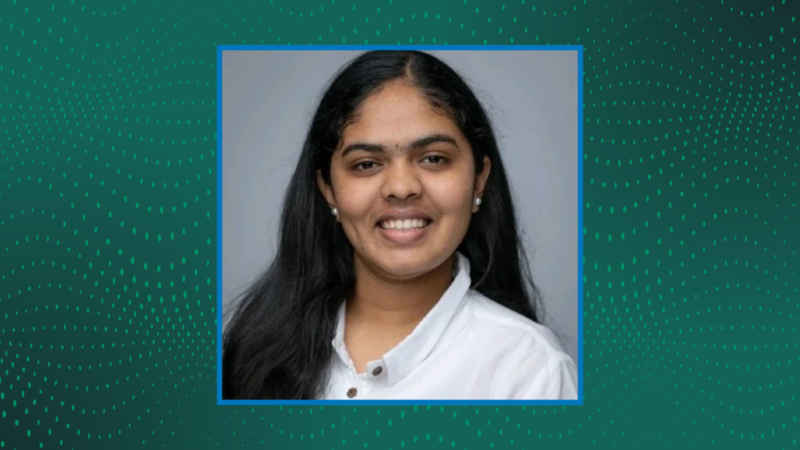
In honor of World Pharmacy Day, we are highlighting Dr. Abena Ntim Asamoah, a pharmacist from Ghana who is currently pursuing her Master of Science in Analytics at HU. With six years of experience as a Clinical Pharmacist, Abena has led quality improvement initiatives, guided community pharmacies, and mentored future pharmacists.
Now studying at Harrisburg University, Abena is combining her clinical expertise with the power of analytics. She has published peer-reviewed papers on the role of data and AI in healthcare and is passionate about using data-driven solutions to optimize patient care, improve supply chains, and address systemic healthcare challenges.
We spoke with Abena to learn more about her career, her studies at HU, and how she sees data shaping the future of pharmacy.
What inspired you to become a pharmacist?
It wasn’t love at first sight. I prefer to build things and solve problems, so I wanted to be an engineer at first. However, my dad encouraged me to pursue an aspect of healthcare. He had seen in me something I hadn’t quite figured out at the time.
When it was time, I chose to study pharmacy probably to satisfy my dad. I wasn’t sure it was truly for me until I started my clinical years. The connections I built with patients and the fulfillment I got from helping them completely changed my perspective. I got hooked! I knew without a doubt that this was my calling, and now I look forward to making a significant contribution to the world of pharmacy.
What has been the most rewarding part of your career so far?
The most rewarding moments are always the personal ones: seeing patients improve and knowing that somehow my contribution was necessary. I’ve also found fulfillment in projects that impact healthcare generally, like conducting ward rounds, making clinical interventions, performing follow-ups, and mentoring pharmacy interns.
Teaching and guiding interns has been especially meaningful because of the opportunity to duplicate myself: confident, resourceful team players who care. These experiences get me up, ready to go in the morning and sometimes keep me up at night – but in a good way.
Can you tell us about your background before coming to Harrisburg University?
Before HU, I practiced as a Clinical Pharmacist in one of Ghana’s premium hospitals, The Trust Hospital. I worked there for six years, during which I consciously contributed to improving the health outcomes of my clients and that of the pharmacy department. During this period, I provided consultancy services to community pharmacies and guided them to optimize operations and improve patient care.
I also frequently explore research and have published articles on healthcare improvement strategies and bringing to bear my commitment to combining clinical expertise, leadership, and innovation to make a meaningful impact in healthcare.
To develop myself, I enrolled in a Hospital Administration & Management certificate program, which contributed to my appreciation of the bigger, fuller picture of management. I was appointed the Quality Improvement Head for the pharmacy department and Secretary for the Patient Safety Committee of the hospital. I led initiatives such as telemedicine programs, adverse drug reaction reporting, clinical interventions, and follow-ups, all aimed at improving patient care and departmental efficiency.
Of course, I’ve done other things besides pharmaceutical sciences. I channeled my love for cooking into establishing a catering business and operating a restaurant, harnessing valuable entrepreneurial skills like team management, problem-solving, and creative thinking. I also run an organization that cares for underprivileged children: helping them return to school, offering counseling, and providing motivational talks to encourage and shape their minds for a better future.
What motivated you to pursue a Master’s in Analytics at HU?
When I accepted the appointment to serve as the Quality Improvement Head for the pharmacy department and did it for a little while, I became keenly aware of the systems and processes that determine the healthcare outcomes not only for individual patients but entire communities. I’d say that was the turning point for me, seeing firsthand how data drives smarter decisions and efficiency.
Are there any professors at HU that have had an impact on your academic journey?
Professor Vikas Bhardwaj and Dr. Kevin Huggins have encouraged me to think critically and ask questions beyond the numbers. Their guidance has helped me to approach research and projects with a mindset focused on real-world impact.
Have you had the opportunity to work on any research projects during your time at HU?
Yes! I have published peer-reviewed papers on the role of data and AI in healthcare, particularly in resource-limited settings. Conducting peer-reviewed research reinforced the importance of rigorous methodology and combining analytics with clinical knowledge. These projects inspired me to explore innovative solutions for improving patient outcomes, optimizing clinical interventions, and addressing gaps in healthcare delivery.
How do you see data and analytics playing a role in the future of pharmacy and healthcare?
Data is going to be the backbone of healthcare. It can optimize treatments, reduce errors, and ensure medicines reach the people who need them most. In pharmacy, I see analytics playing a crucial role in predicting drug shortages, improving supply chains, and transforming care from reactive to proactive. By applying data-driven strategies, we can design solutions that are both effective and equitable, ensuring better outcomes for patients and stronger healthcare systems overall.

What skills or knowledge from the Analytics program have been most valuable to you so far?
The technical skills – data cleaning, analysis, and visualization – are foundational, but what has been even more valuable is learning how to frame complex healthcare problems so that data can provide actionable solutions. This approach has been critical not only for my research and peer-reviewed publications, but also for improving clinical workflows, guiding interventions, and tackling systemic challenges like predicting drug shortages and strengthening healthcare supply chains.
What advice would you give to students looking to pursue a career in pharmacy or healthcare?
Stay curious and don’t limit yourself. Pharmacy is more than dispensing medication; it’s about improving lives. Combine your healthcare training with skills like analytics, entrepreneurship, or innovation, and you’ll be able to tackle bigger problems and design solutions that directly impact individuals and entire communities.
ABOUT HARRISBURG UNIVERSITY
Harrisburg University was recently recognized by US News & World Report as one of the nation’s most innovative colleges. HU is accredited by the Middle States Commission on Higher Education and is a private, nonprofit university offering bachelor’s and graduate degree programs in science, technology, engineering, mathematics, nursing, and other health science fields. For additional information about HU’s affordable, demand-driven undergraduate and graduate programs, please call 717.901.5146 or email Connect@HarrisburgU.edu. Stay updated by following Harrisburg University on LinkedIn, Instagram, and Facebook.