HARRISBURG, PA — When you see the word “cat,” your mind might instantly think “dog.” If it does, you’ve just experienced semantic priming: the brain’s tendency to process related words more quickly than unrelated ones. Psychologists have studied this phenomenon for decades, but most research to date has relied on small, homogenous samples (often Western, English-speaking college students).
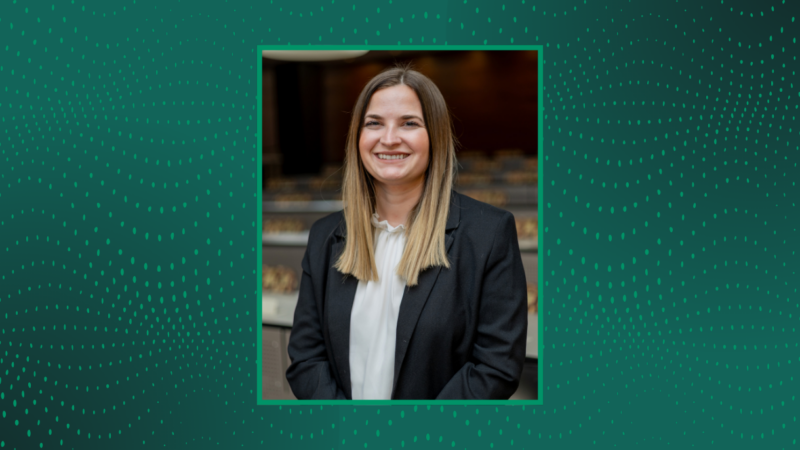
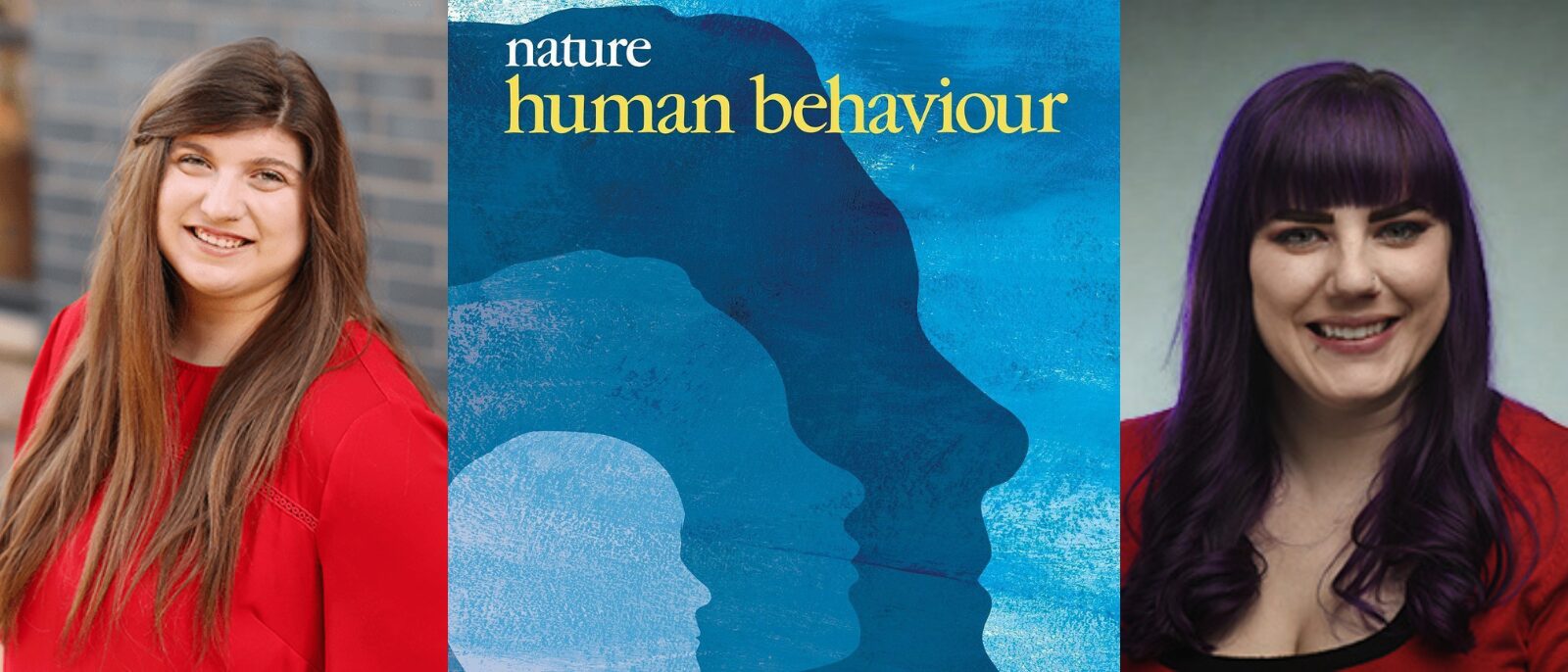
Harrisburg University of Science & Technology’s (HU) Dr. Erin Buchanan, Professor of Cognitive Analytics, and Data Science Ph.D. student Addie Clark ‘27 set out to change that. Dr. Buchanan, a professor of analytics and data science and Co-Director of the Psychological Science Accelerator, a nonprofit consortium that coordinates large-scale global studies, joined hundreds of collaborators to ask a deceptively simple question: Does the way our brains link meanings work the same way around the world?
The result, published in Nature Human Behaviour (full text available here), marks one of the largest multilingual replications of semantic priming ever conducted. The team collected data from participants speaking 30 languages to test how thousands of word pairs, from “Romeo–Juliet” to “whisky–cognac,” behave in different linguistic and cultural contexts.
“I always compare it to spilling water down a hill,” Buchanan said. “You don’t have control; it spreads out to things that are connected.”
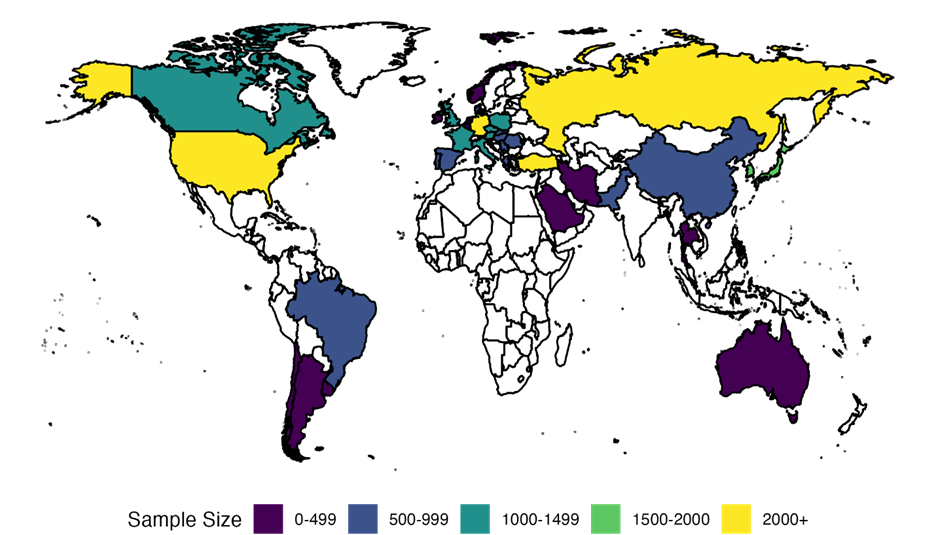
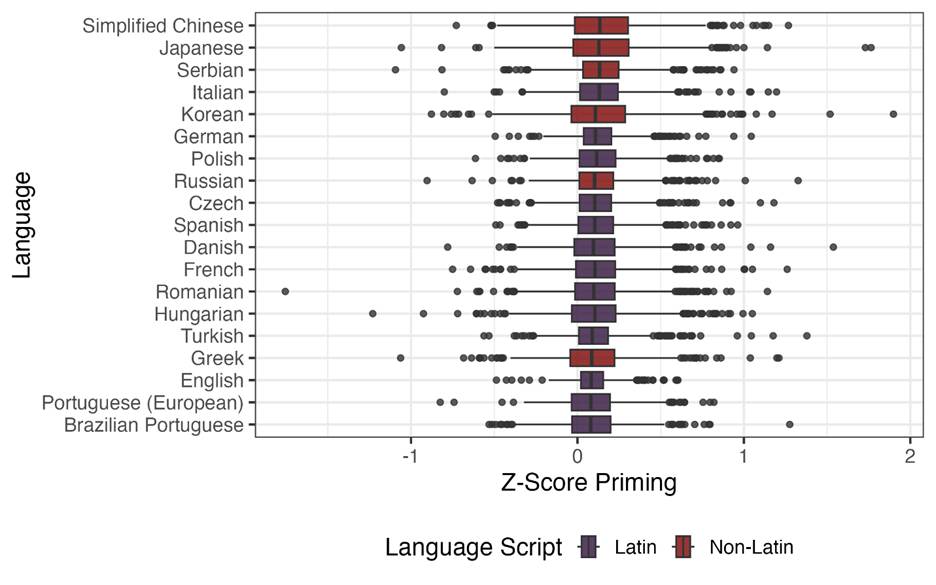
The study used over 1,000 carefully translated word pairs, ensuring that meanings, frequencies, and cultural references aligned across languages as diverse as English, Greek, Chinese, Korean, Serbian, and Russian. Buchanan expected significant differences among languages, yet the findings were strikingly consistent.
“The biggest surprise was the consistency in priming across languages,” she said. “I expected much more variability – that some would show stronger effects than others. But they all showed pretty much the same effect.”
This consistency suggests that the way humans connect ideas may be more universal than previously believed.
The project also inspired a new phase of inquiry supported by a National Science Foundation grant, bringing artificial intelligence (AI) into the picture. Working with Addie, Buchanan’s team is now comparing how large language models (LLMs) [think ChatGPT] handle semantic priming. The goal: to see whether these models “think” about word relationships in the same way people do.
“When we compare humans and AI, we can start asking: If they don’t prime in the same way, what’s the difference?” Buchanan explained. “Is the brain doing math in the background, like an algorithm, or is something else happening entirely?”
For Addie, the experience has been a defining part of her doctoral journey.
“I was drawn to this project because it brings together several areas I’m interested in: language, cognition, and computational methods. Through this work, I’ve gained hands-on experience with multilingual language data, learned best practices for coordinating research across international teams, and developed stronger problem-solving skills as I work with both human and model-based datasets.”
Addie said the research has also shaped her future goals.
“It’s shown me how impactful research can be when it blends cognitive science with advanced analytical tools,” she said. “The experience has strengthened my desire to build a career focused on research that leverages computational methods to better understand human cognition and support real-world scientific progress.”
The NSF-funded project will also help build a new online platform Buchanan describes as “a Prolific for language”: a citizen-science network where participants can complete language-based studies and receive personalized feedback on their results. The platform will make linguistic data more accessible, connect researchers across disciplines, and invite the public to explore how their own language patterns compare to others.
Next, Buchanan and her team plan to expand their dataset to include even more languages, deepening comparisons both across and within linguistic families.
That goal reflects the same spirit of openness and curiosity that drives both science and communication: the human desire to understand how we all make meaning, one word at a time.
ABOUT HARRISBURG UNIVERSITY
Harrisburg University was recognized by US News & World Report as one of the nation’s most innovative colleges for 2025. HU is accredited by the Middle States Commission on Higher Education and is a private, nonprofit university offering bachelor’s and graduate degree programs in science, technology, engineering, mathematics, nursing, and other health science fields. For additional information about HU’s affordable, demand-driven undergraduate and graduate programs, please call 717.901.5146 or email Connect@HarrisburgU.edu. Stay updated by following Harrisburg University on LinkedIn, Instagram, and Facebook.
# # #