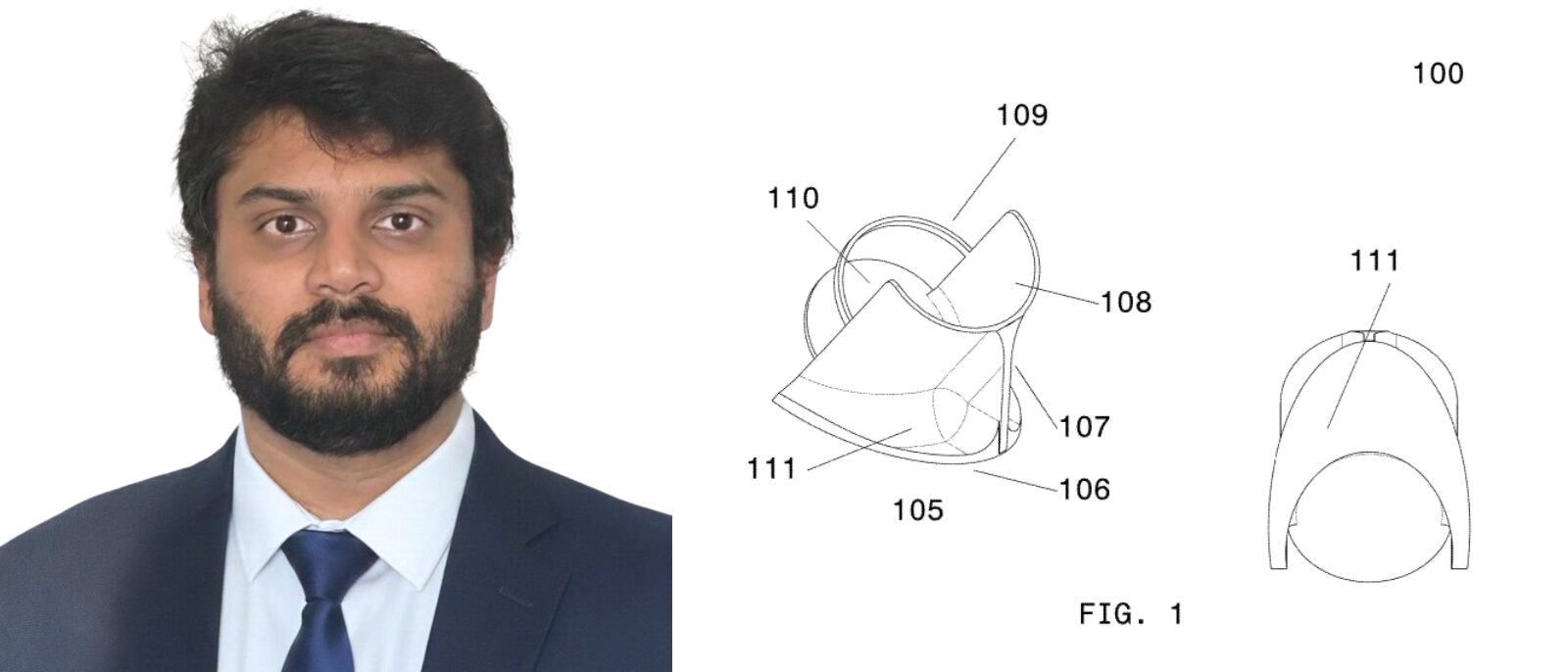
Vishnu Vardhan Chakravaram ’26, a graduate student in Harrisburg University of Science & Technology’s (HU) Information Systems Engineering & Management (ISEM) master’s program, has transformed a simple everyday observation into a patented invention.
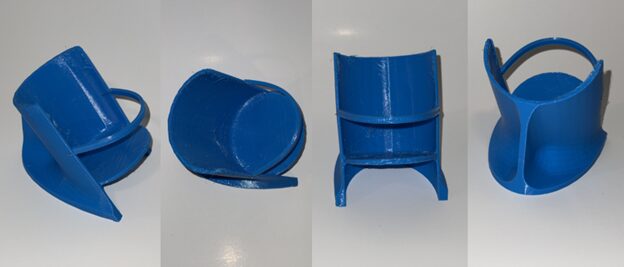
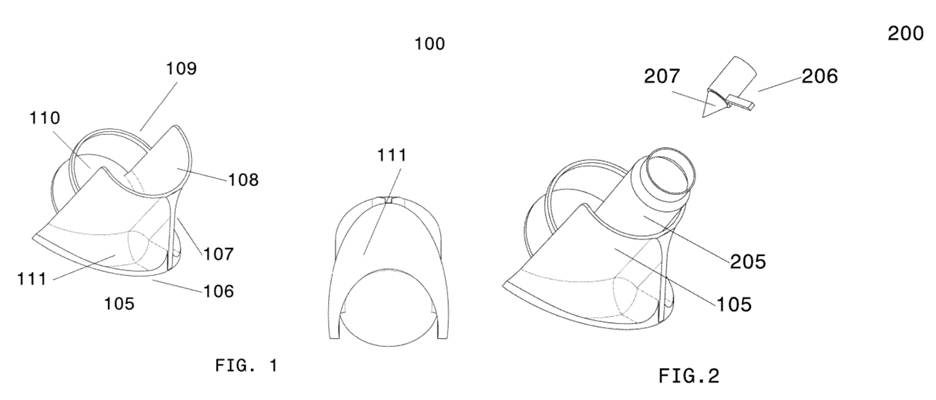
Vishnu is the sole inventor, applicant, and assignee on the patent for the Leaning Container Holder of Nashville, a container-support device designed to hold everyday items such as cans, cups, bottles, or tumblers, at a gentle angle rather than flat.
This angled positioning improves comfort, stability, and ease of use in daily situations. The patented design addresses a functional gap in consumer container handling by enabling stable, hands-free angled support without moving parts, an approach not commonly addressed by existing consumer products.
The invention is protected by a US patent (US 12,458,161 B2). While developed during his graduate studies, the invention was independently conceived, engineered, and patented outside of sponsored university research. Vishnu handled every stage of development, including design, prototyping, testing, and 3D printing.
Below, he shares the inspiration behind the invention, the challenges he’s experienced along the way, and how his experience at HU shaped his approach to innovation.
What inspired you to create the Leaning Container Holder of Nashville?
Most containers are designed to sit upright, which can make them awkward to use when partially full, often leading to spills, foam overflow, or uncomfortable handling. I was inspired by observing how people naturally tilt containers while pouring or drinking, and I wanted to design a simple solution that supports this natural behavior without requiring active effort from the user.
The original inspiration came from a personal experience when my son was an infant. While preparing a milk bottle using powdered formula, I had to tilt the bottle at an angle to pour the formula cleanly. This was easy when using both hands, but difficult when holding my son in one hand. I initially designed the holder to solve this specific problem. After 3D printing and using the prototype over time, I realized the same angled-support concept had broader applications in home bar and kitchen settings.
What problems does it solve?
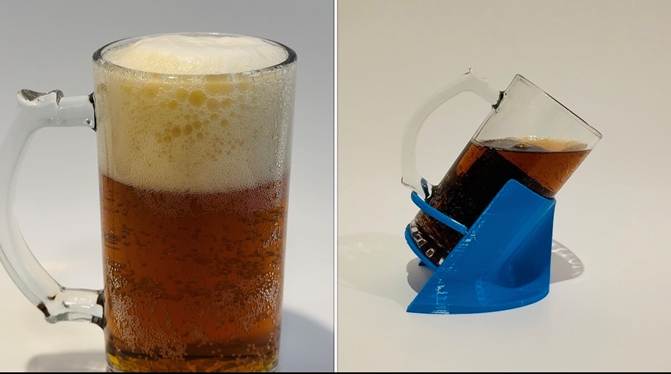
- Beverage pouring (home bar or bar setting): When beer is poured into a glass, it often produces excessive foam, sometimes two inches or more. Foam preference varies by user. When a glass is placed on the Leaning Container Holder, the angled position reduces foam generation during pouring. This allows consistent results without requiring pouring skill.
- Kitchen refilling: In kitchen settings, the holder can support containers being refilled. With the receiving container stabilized at an angle, the user can use both hands to manage heavier containers, improving control, and reducing spills.
- Baby care: In baby care scenarios, a bottle can be placed on the holder while formula is added. This helps prevent spills and reduces sticky residue on surrounding surfaces if formula is accidentally dropped.
Together, these use cases demonstrate how a single geometric design can support multiple real-world applications across domestic, hospitality, and childcare environments.
What makes this invention unique or innovative compared to other solutions?
The innovation lies in its simplicity. The holder relies on carefully designed geometry rather than moving parts or complex mechanisms to provide stable angled support. This makes it easy to use, easy to manufacture, and adaptable to multiple container types. The angled support approach addresses a specific functional gap not commonly addressed by existing consumer products.
What was the most challenging part of the design or patenting process, and what did you learn from it?
The most challenging part was translating a simple everyday observation into a clearly defined design that could be protected through the patent process. This experience reinforced the importance of precision in both engineering design and clearly articulating how an invention works and why it is different.
As a Pro Se patent applicant, I also had to learn how to analyze initial patent rejections and prepare clear, structured responses to address the examiner’s concerns, which ultimately led to the patent being allowed. This process strengthened my ability to evaluate prior art, articulate novelty, and defend technical distinctions at a professional level.
What role did Harrisburg University play in supporting your work?
I was drawn to the ISEM program because of its strong focus on systems-oriented coursework. The program emphasizes how engineering, management, and real-world problem solving intersect, which aligned well with my interest in designing practical, user-focused solutions.
Several courses at HU influenced my thinking behind this invention, particularly ISEM 530 (Systems Engineering Principles), ISEM 558 (IoTs and Industry 4.0), and MGMT 510 (Business Strategy & Management Principles). These courses helped shape my approach to systems thinking, usability, and ergonomics. They also strengthened my ability to analyze problems holistically, consider user interaction and constraints, and think through practical implementation.
Professor Barry Boyer also encouraged me to bring this patented invention forward as part of my GRAD 695 thesis, which helped connect my academic work with independent innovation.
Looking back, what is one key takeaway from your time at HU that’s had the biggest impact on your professional growth?
One key takeaway is the importance of structured thinking when solving open-ended problems. HU’s curriculum reinforced the idea that innovation is not just about creativity, but about applying disciplined systems thinking to everyday challenges.
As he completes his final course and prepares to graduate with his master’s degree in Information Systems Engineering & Management, Vishnu encourages observing everyday challenges and not dismissing simple observations. “Harrisburg University provides a strong foundation in systems and analytical thinking,” he said. “Using those tools to refine small observations can lead to meaningful and practical innovations.”
For current HU students interested in innovation and product development, Vishnu encourages close observation of everyday challenges and to not dismiss simple ideas: “Harrisburg University provides a strong foundation in systems and analytical thinking,” he said. “Using those tools to refine small observations can lead to meaningful and practical innovations.”
# # #
ABOUT HARRISBURG UNIVERSITY
Harrisburg University of Science & Technology (HU) is an independent, nonprofit university offering degrees in advanced manufacturing, engineering, robotics, nursing, cybersecurity, and other critical fields. Accredited by the Middle States Commission on Higher Education, HU serves a diverse student body through undergraduate, graduate, and doctoral programs that link learning and research with practical applications. For information about HU’s affordable STEM degrees and professional development programs, call 717.901.5146 or email Connect@HarrisburgU.edu. Stay in the know by following Harrisburg University on LinkedIn, Instagram, and Facebook.
MEDIA CONTACT
Do you have questions about this story? Interested in lining up an interview? Please contact Dan Wilhelm, Communications Manager for Harrisburg University of Science & Technology, at DWilhelm@HarrisburgU.edu or 717.901.5100×1724.
# # #