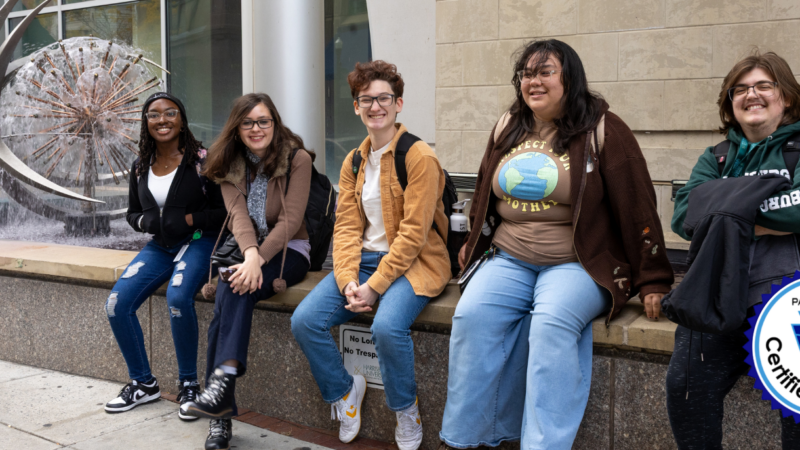
HARRISBURG, PA — Harrisburg University of Science & Technology (HU) is proud to announce the formation of four new academic schools. This is a major step for the University in its mission to prepare students for the rapidly evolving, increasingly STEM-focused economy. Complementing the institution’s growth over the last decade, these four schools will lead the next chapters of Harrisburg University’s educational delivery.
Each school represents a major market cluster in Pennsylvania and the United States, and each serves as a hub for organizing and expanding HU’s academic and administrative strengths. By aligning faculty expertise, student talent, and institutional resources within these new schools, Harrisburg University is even better positioned to respond to the ways in which science and technology are transforming business and society.
Accompanying HU’s new academic structure is the addition of a third appointment category for faculty members. HU’s community of instructors is comprised of Full-Time Faculty, who lead student engagement and teach full-time, as well as Corporate Faculty, who bring their expertise from the boardroom to the classroom as they unite academic and industry priorities.
Effective immediately, Harrisburg University is adding a third appointment category – Adjunct Faculty – to help meet the demand for fast-growing fields such as AI, analytics, geospatial technology, computer science, and more. These are industry professionals who have transitioned to teaching from roles in high-demand STEM fields.
Ultimately, this new academic structure will allow HU to be even more responsive to workforce needs – through curriculum updates, new programs, enhanced inter-disciplinary collaboration, and more – as we develop the industries most critical for national competitiveness.
School of Analytics & Computational Sciences
Interim Dean: Roozbeh Sadeghian, Ph.D.
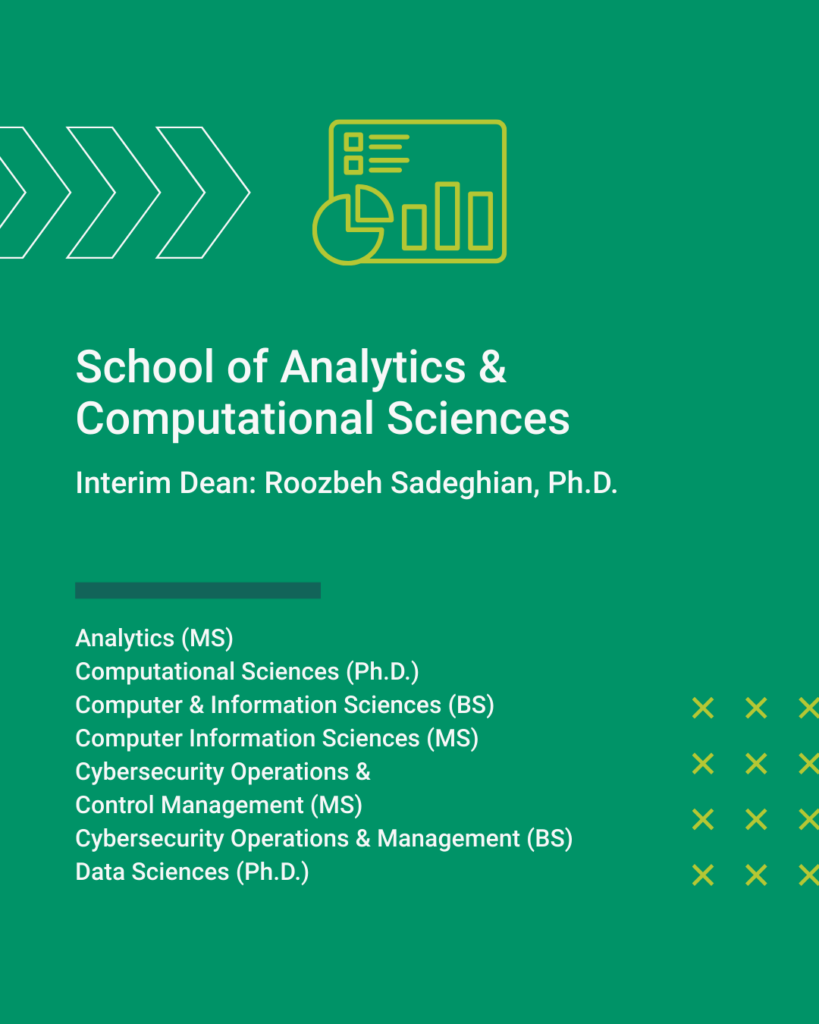
Within the School of Analytics & Computational Sciences, students and faculty from diverse programs, including Analytics, Computer Science, Cybersecurity, and Data Science, will have new opportunities to work together on cutting-edge projects, oftentimes right alongside industry innovators and major employers. This collaborative approach will mirror the teamwork required in the workplace, preparing graduates for careers in fields where complex problems demand expertise from multiple disciplines.
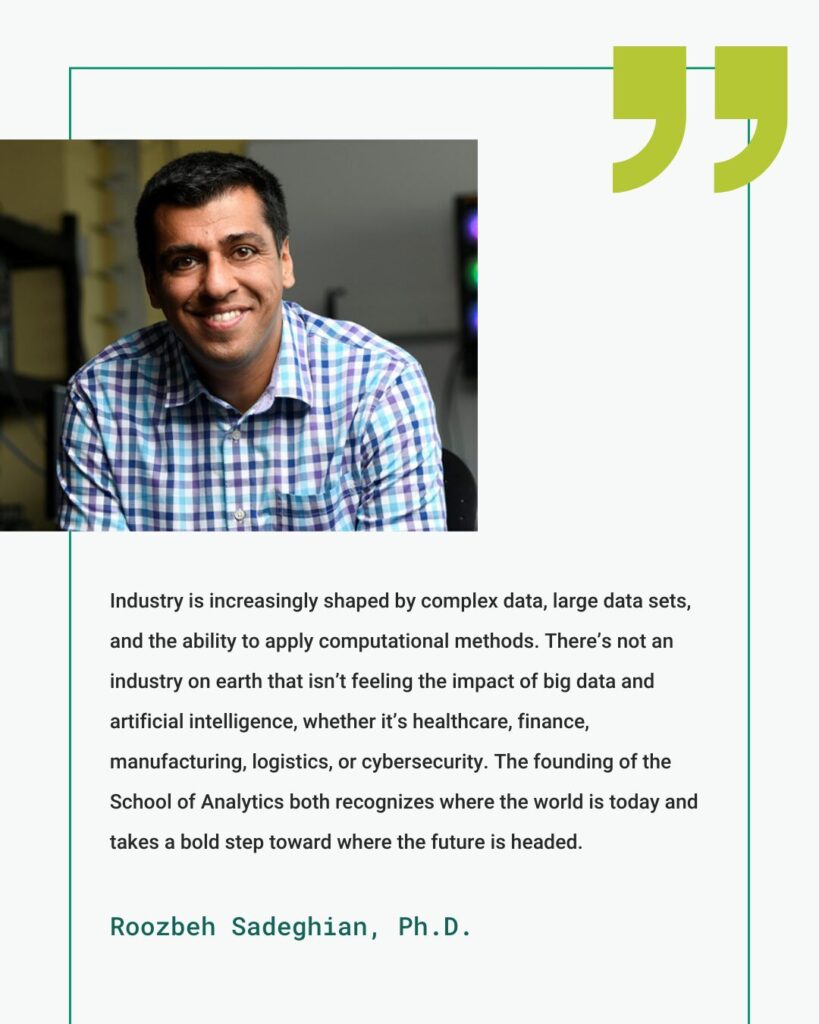
“Industry is increasingly shaped by complex data, large data sets, and the ability to apply computational methods,” said Dr. Roozbeh Sadeghian, Interim Dean for the School of Analytics & Computational Sciences. “There’s not an industry on earth that isn’t feeling the impact of big data and artificial intelligence, whether it’s healthcare, finance, manufacturing, logistics, or cybersecurity.”
Pennsylvania’s growing needs in areas such as healthcare analytics, financial technology, advanced manufacturing, and smart logistics present enormous opportunities for graduates trained in computational sciences. HU’s updated academic restructuring ensures that students gain not only technical expertise but also the teamwork and problem-solving skills employers require.
“The founding of the School of Analytics both recognizes where the world is today and takes a bold step toward where the future is headed,” added Dr. Sadeghian. “This is about ensuring our students are equipped to lead in industries that will shape the culture and economy of tomorrow.”
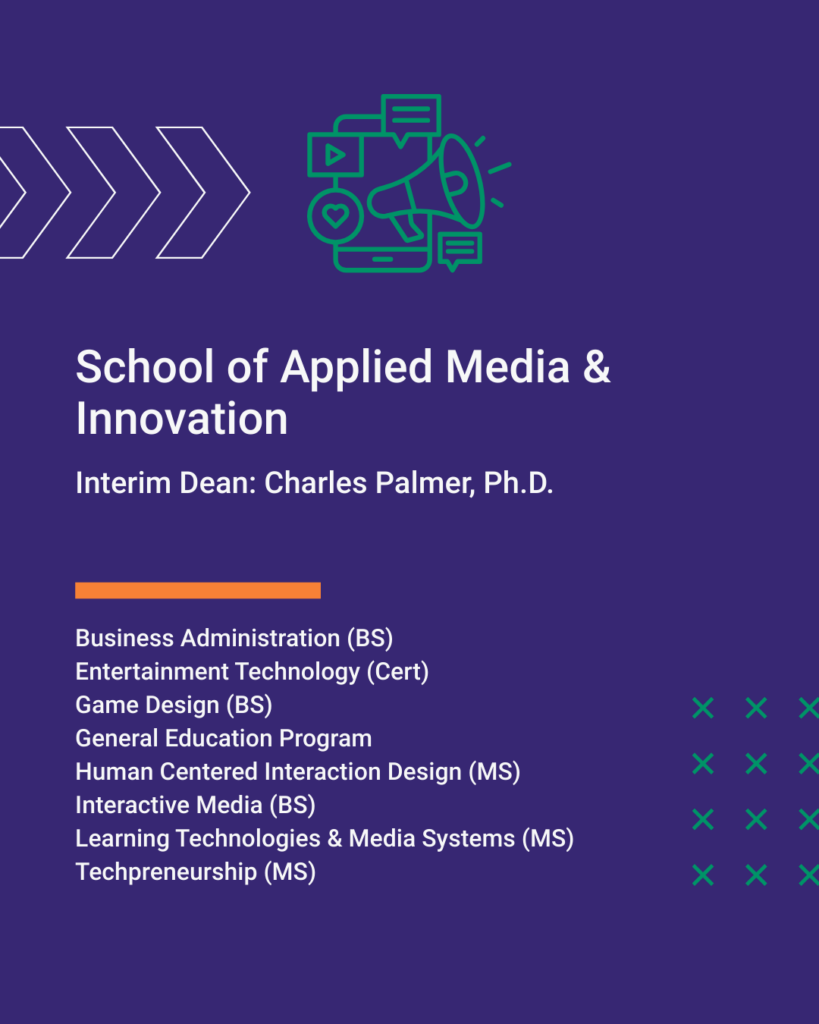
School of Applied Media & Innovation
Interim Dean: Charles Palmer, Ph.D.
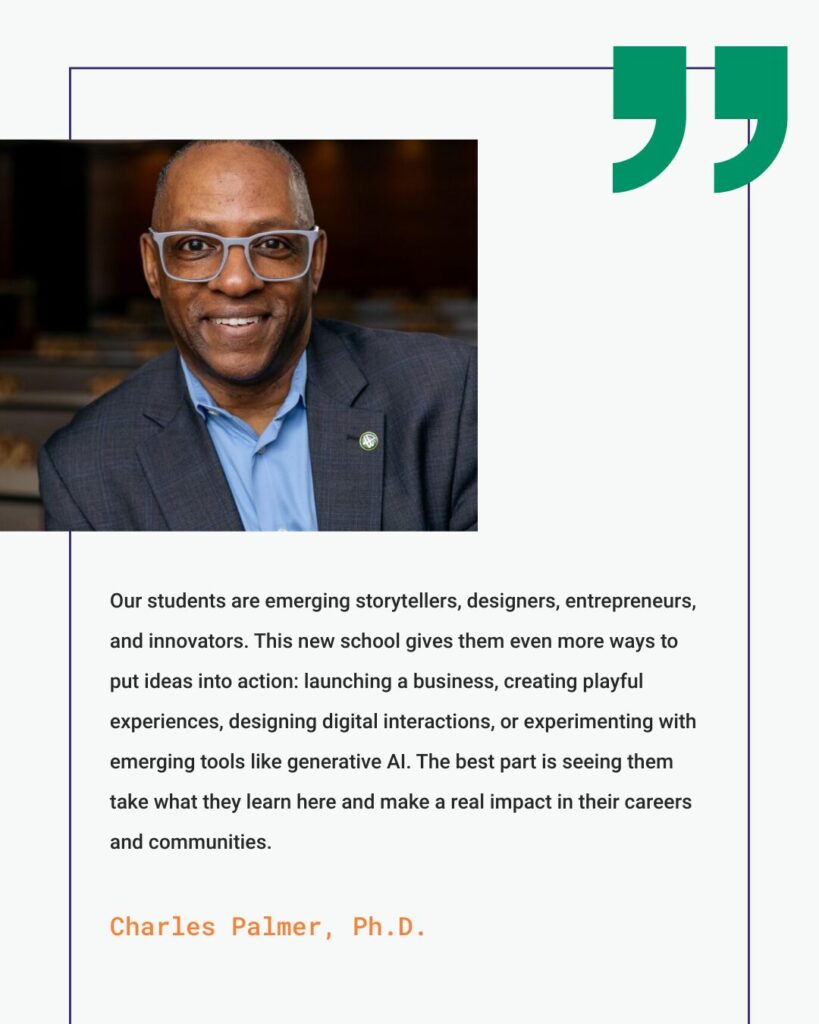
Applied media and innovation are at the heart of how we live, work, and connect – from the games we play and the stories we tell, to the apps, platforms, and businesses that shape everyday life. These fields sit at the crossroads of creativity and STEM, driving new opportunities in Pennsylvania and beyond.
“Our students are emerging storytellers, designers, entrepreneurs, and innovators,” said Dr. Charles Palmer, Interim Dean of the School of Applied Media & Innovation. “This new school gives them even more ways to put ideas into action: launching a business, creating playful experiences, designing digital interactions, or experimenting with emerging tools like generative AI. The best part is seeing them take what they learn here and make a real impact in their careers and communities.”
The School of Applied Media & Innovation is designed with collaboration in mind. Students enrolled in HU’s undergraduate programs of Business Administration, Game Design, and Interactive Media, and graduate programs of Human-Centered Interaction Design, Learning Technologies & Media Systems, and Techpreneurship, will work together across disciplines and in cooperation with local businesses, creative agencies, and technology leaders. This structure makes it easier to tackle real projects, connect with industry mentors, and build portfolios that show employers not just what students know, but what they can do.
For Central Pennsylvania, this means more graduates ready to step into roles that local companies are eager to fill – from digital marketers and UX designers to entrepreneurs and creative leaders. For our students, it means learning in a community where creativity, technology, and business come together in hands-on ways every day.
“The creation of this school reflects a simple truth,” added Dr. Palmer. “Our region needs imaginative, technically skilled graduates, and our students are eager to meet that challenge. By combining innovation, collaboration, and practical experience, we’re preparing them not just for jobs, but to thrive in a world where creativity and technology open doors to meaningful careers.”
School of Engineering & Management
Interim Dean: Thomas Wise, Ph.D.
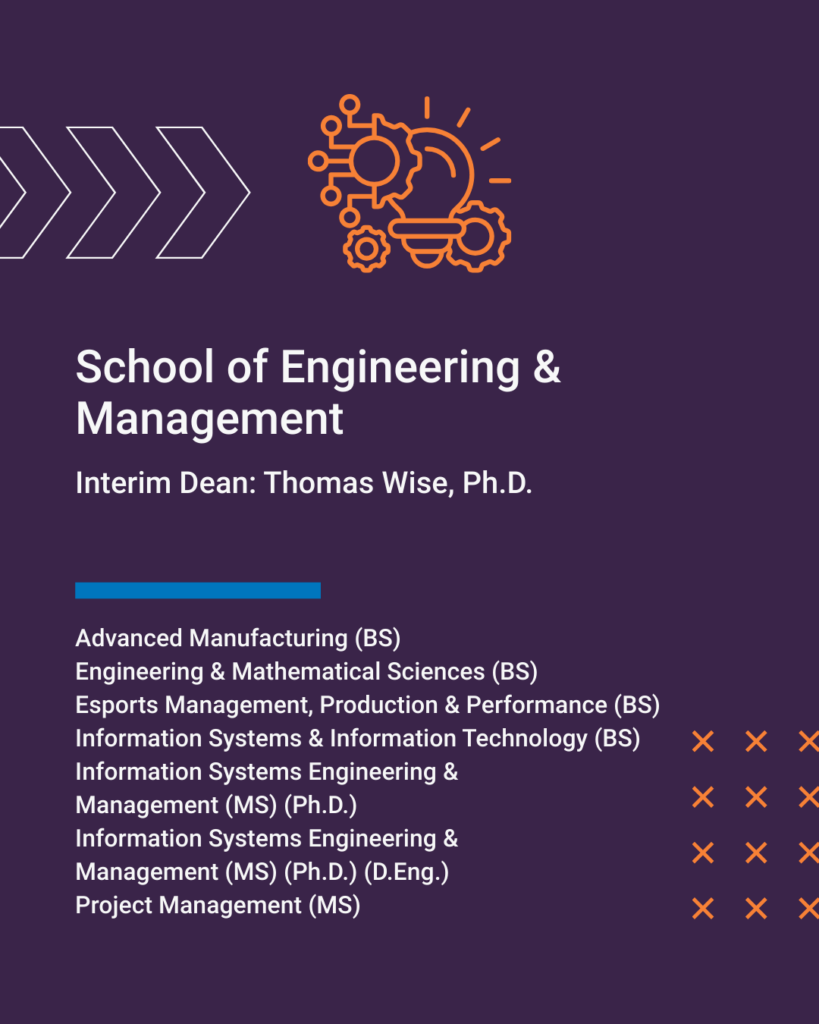
The School of Engineering & Management gathers students and faculty from Advanced Manufacturing & Robotics, Engineering, Information Systems, Project Management, and others.
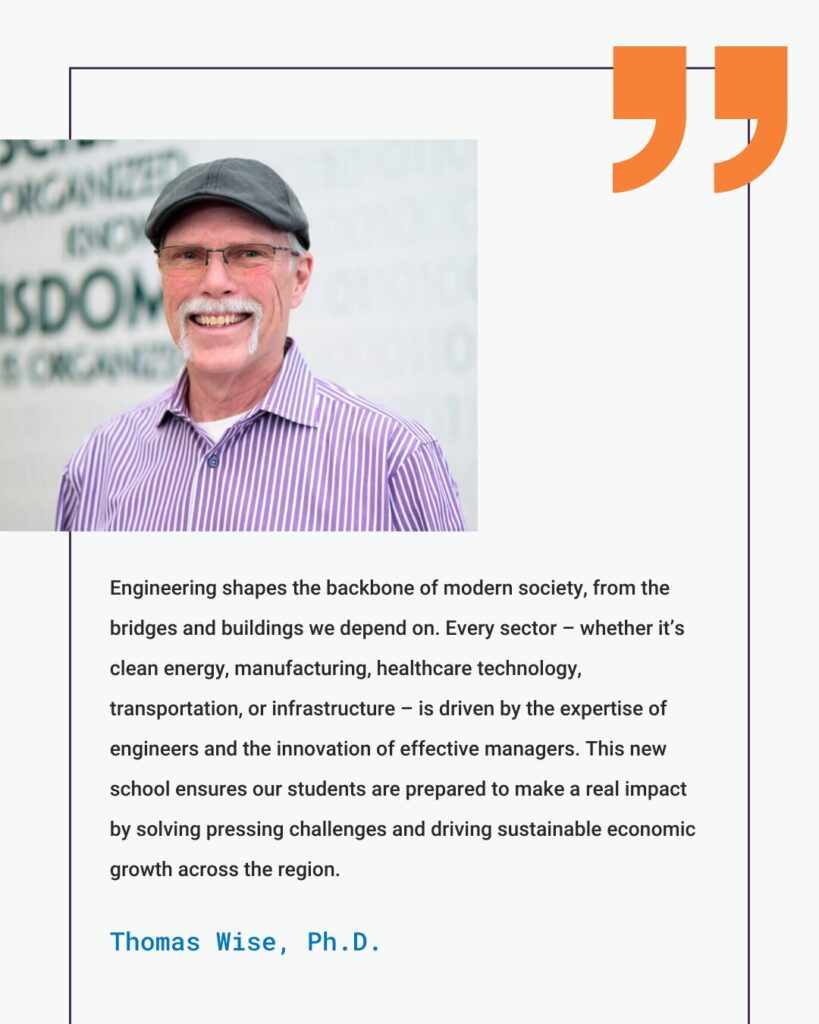
“Engineering shapes the backbone of modern society, from the bridges and buildings we depend on, to the systems that power the global economy,” said Dr. Thomas Wise, Interim Dean for the School of Engineering & Management. “Every sector – whether it’s clean energy, manufacturing, healthcare technology, transportation, or infrastructure – is driven by the expertise of engineers and the innovation of effective managers. This new school ensures our students are prepared to make a real impact by solving pressing challenges and driving sustainable economic growth across the region.”
By emphasizing innovation, leadership, and workforce readiness, the School of Engineering & Management is poised to expand Harrisburg University’s role in strengthening Pennsylvania’s economy. The demand for engineering and management professionals is growing rapidly, with industries such as renewable energy, advanced manufacturing, infrastructure modernization, and digital transformation requiring highly skilled graduates who can both design solutions and lead teams. Through this academic restructuring, students will gain not only the technical expertise of engineering but also the problem-solving, leadership, and communication skills that employers consistently seek.
“Establishing this school reflects our region’s urgent need for skilled STEM leaders and represents a strong investment in Pennsylvania’s future,” added Dr. Wise. “This is about equipping our students to innovate, lead, and shape the most valuable industries on planet earth.”
School of Health & Science
Interim Dean: Catherine Santai, Ph.D.
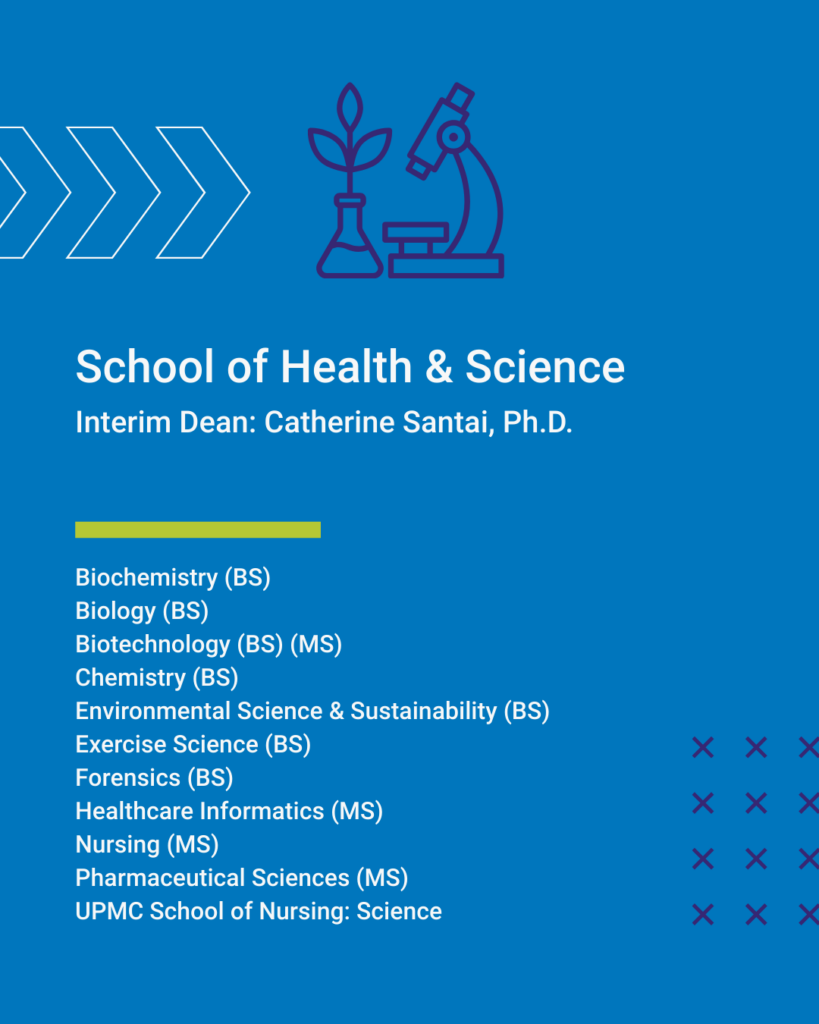
Health and science are at the heart of human progress and our very quality of life. From breakthroughs that save lives to discoveries that safeguard our environment, the healthcare, biotech, environmental sustainability, forensics, life science, and pharmaceutical fields all rely on professionals with deep scientific expertise and a commitment to advancing human well-being.
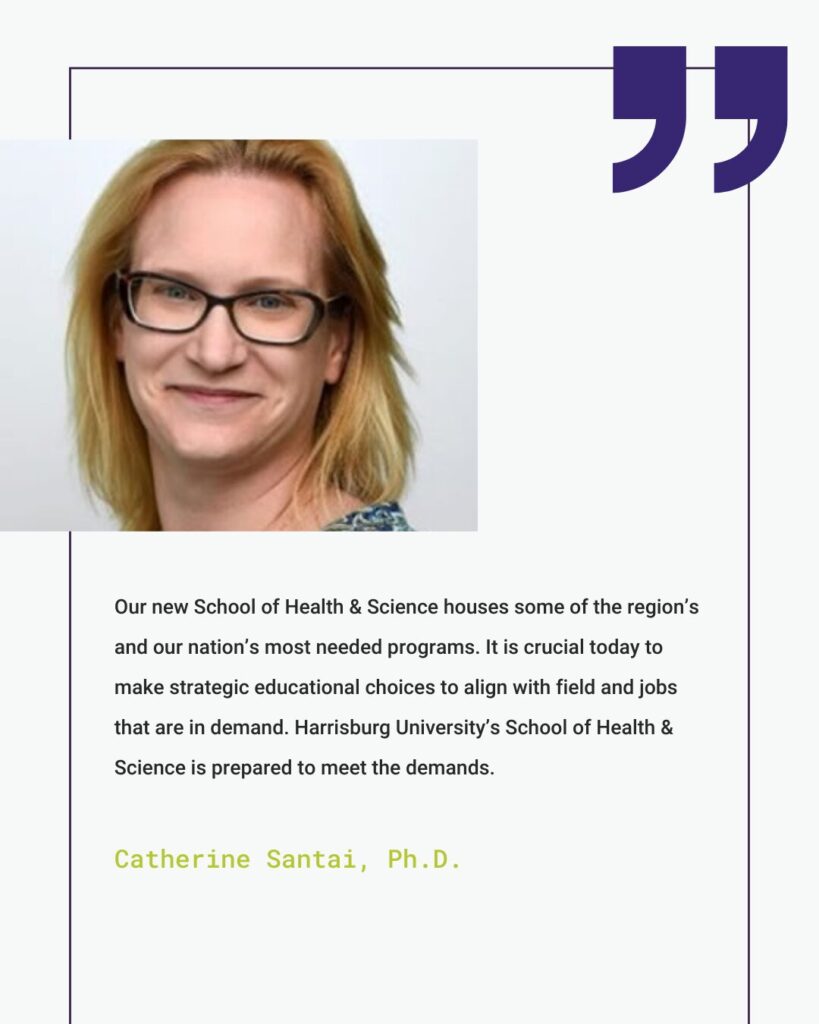
“Our new School of Health & Science houses some of the region’s and our nation’s most needed programs,” said Dr. Catherine Santai, Interim Dean of the School of Health & Sciences.
The Keystone Research Center (2025) reported that the healthcare and education sectors in PA over the last four years have had the largest amount of job growth. In PA alone, one in every four jobs by 2032 is expected to require a college degree or higher.
“It is crucial today to make strategic educational choices to align with fields and jobs that are in demand. Harrisburg University’s School of Health & Science is prepared to meet the demands,” said Dr. Santai.
At the national level, the largest projected positive change in employment (+8.4%) is expected to include the private healthcare industry, and the second-largest anticipated positive change in employment (+7.5%) includes scientific and technical services. Life science, physical science, and healthcare are among the Top 10 occupational fields expected to show the greatest growth.
Surveys conducted by Becker’s Hospital Review, the Bureau of Labor Statistics, and others reveal significant vacancy rates across the state of Pennsylvania – especially for physical therapists, certified and registered nurses, physician assistants, and more. The Department of Labor predicts a shortfall of 8,890 registered nurses each year through 2032. “This new school will strengthen our position as a leader as we prepare the next generation of scientists and healthcare professionals,” said Dr. Santai. “Our goal is to ensure students are ready to deliver real results for patients from day one, with skill and purpose.”
HU students and faculty from programs including Biochemistry, Biology, Biotechnology, Chemistry, Environmental Science, Forensics, Exercise Science, Healthcare Informatics, Nursing, and Pharmaceutical Sciences will work together on hands-on projects, often in partnership with regional hospitals, research institutes, companies, and health organizations. The UPMC School of Nursing and Harrisburg University collaborate to train our next generation of nurses in an accelerated program to address Pennsylvania’s nurse deficit. Likewise, HU is a workforce development partner with Hamilton Health Center to train select students during high school to move directly into jobs as Certified Clinical Medical Assistants after graduation.
These approaches highlight the collaborative nature of today’s healthcare sector and Harrisburg University, where scientists, clinicians, and data experts work in tandem to improve lives and strengthen communities.
HU’s academic restructuring was undertaken to emphasize not just theory but also strong collaboration, problem-solving, and communication: a combination of skills highly prized by todays’ employers. “The School of Health & Science is about equipping our students to discover, to heal, and to shape healthier, more sustainable communities for generations to come,” concluded Dr. Santai.
For more information about Harrisburg University’s four new schools, please visit HarrisburgU.edu/Schools.
ABOUT HARRISBURG UNIVERSITY
Harrisburg University was recognized by US News & World Report as one of the nation’s most innovative colleges for 2025. HU is accredited by the Middle States Commission on Higher Education and is a private, nonprofit university offering bachelor’s and graduate degree programs in science, technology, engineering, mathematics, nursing, and other health science fields. For additional information about HU’s affordable, demand-driven undergraduate and graduate programs, please call 717.901.5146 or email Connect@HarrisburgU.edu. Stay updated by following Harrisburg University on LinkedIn, Instagram, and Facebook.
MEDIA CONTACT
Do you have questions about this story? Interested in lining up an interview with our faculty? Please reach out to Dan Wilhelm, Communications Manager for Harrisburg University of Science & Technology, with all media inquiries.
# # #