Bachelor of ScienceForensic Science
Turn your passion for science and justice into a career with Harrisburg University’s Bachelor of Science in Forensic Science.
This dynamic, hands-on degree prepares students for careers in forensic science, crime scene investigation, and laboratory analysis. Led by experienced faculty and industry professionals, students gain a deep understanding of scientific methods and legal procedures, while applying their knowledge in realistic investigative scenarios.
KEY TAKEAWAYS
Mission Statement: The Forensic Science program is dedicated to providing a rigorous, science-centered curriculum reflective of real-world expectations in forensic science that integrates fundamental scientific principles, critical thinking, and hands-on laboratory experience. The program fosters ethical decision-making, effective communication, and experience-driven learning, equipping students to become competent professionals and leaders in forensic science through faculty mentorship, community partnerships, and experiential opportunities.
- Led by expert faculty with real-world forensic experience.
- Courses taught by professionals in law, psychology, pathology, crime scene investigation, toxicology, and other fields.
- Research and case study projects tailored to student interests.
- Dedicated on-campus crime scene facility for hands-on learning.
- Strategic internship partnerships with local law enforcement and forensic agencies.
- Experiential learning through mock trials and crime scene simulations.
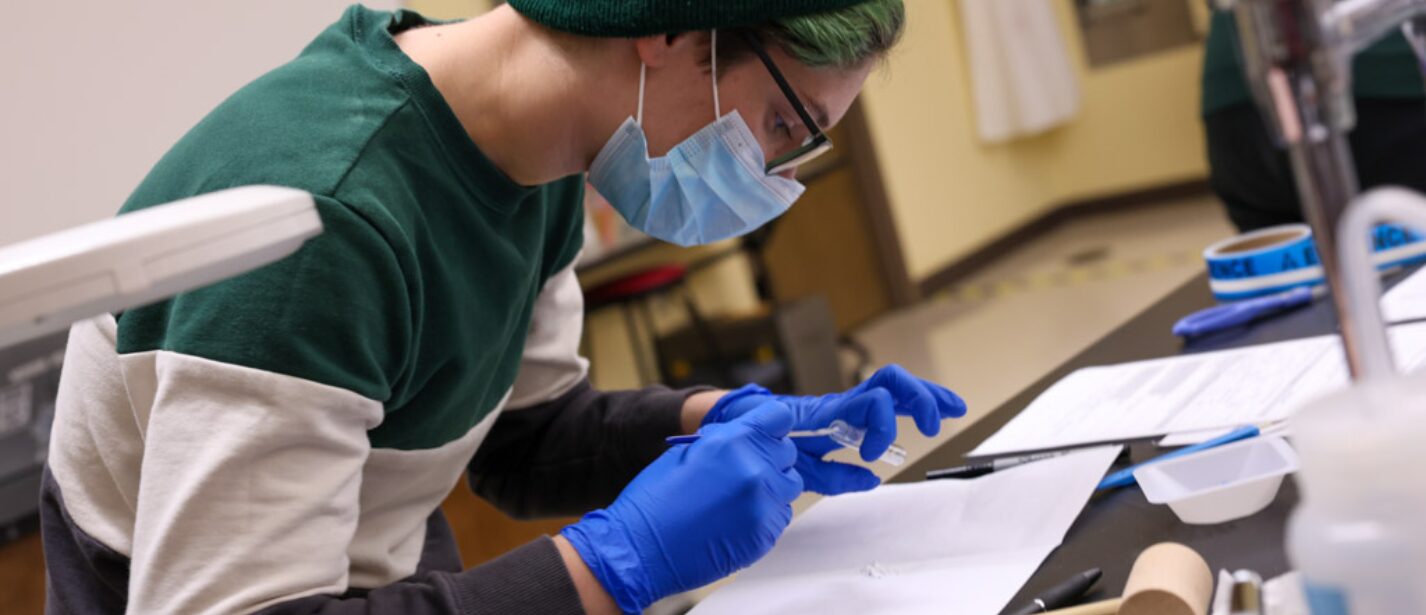
Each student enrolled in the Bachelor of Science in Forensic Science program completes case studies as part of the HU experience, gaining invaluable hands-on experience with industry-standard tools and investigative techniques used by today’s leading professionals. Students receive evidence and chain of custody and then choose the appropriate techniques, process the evidence, create an expert report, and testify to their conclusions, mimicking the role of forensic scientists in real casework.
Graduates of the program are well-prepared to enter the workforce as competent and ethical professionals ready to contribute to the advancement of forensic science. The curriculum emphasizes scientific and professional integrity, critical thinking, and hands-on experience to ensure students are career-ready and equipped to make meaningful impacts in laboratory, investigative, and research settings. Students pursuing careers in forensic science should be aware that background checks, drug screenings, and other site-specific requirements may apply to internships and employment opportunities in this field.
PROGRAM GOALS
From fingerprint, blood-spatter, and toxicology evidence analysis to anthropological fieldwork, students build practical skills and professional confidence while contributing meaningfully to the broader field of forensic science. Graduates of the B.S. in Forensic Science program will:
- Obtain a thorough grounding in the natural sciences.
- Build upon this background of natural sciences through a series of advanced studies.
- Develop an appreciation of issues specific to forensic science through coursework and laboratory-based instruction.
- Gain practical experience through a series of core competencies specific to the field of forensic science.
INDUSTRY HIGHLIGHTS
The field of forensic science continues to expand as crime-solving techniques advance and incorporate new technologies. HU’s location in Harrisburg provides students with internship opportunities in both the public and private sectors. Depending on their concentration, graduates can pursue careers as forensic scientists, DNA analysts, toxicologists, latent print examiners, or crime scene technicians.
Program Courses
This program requires a total of 47 – 59 semester hours. The semester hour value of each course appears in parentheses( ).
Program and Concentration Enrollment
| Academic Year | Number of Full-time Enrolled Students | Concentration Enrollment |
|---|---|---|
| 2023-24 | 15 | Forensic Chemistry (1); Forensic Biology (4); Crime Scene Investigation (9); Undecided (1) |
| 2024-25 | 12 | Forensic Chemistry (5); Forensic Biology (2); Crime Scene Investigation (5) |
| 2025-26 | 22 | Forensic Chemistry (2); Forensic Biology (7); Crime Scene Investigation (13) |
Career Outcomes & Student Success
| Academic Year | Number of graduates | Graduates with job offers (180 days post-graduation) | Graduates admitted into advanced degree program | Graduates who were unreachable or did not respond |
|---|---|---|---|---|
| 2023-24 | 13 | 10 | 2 | 1 |
| 2024-25 | 5 | 4 | 0 | 1 |
| 2025-26 | 4 | N/A | N/A | N/A |
Student Internship Locations:
- ALS Environmental
- Anne Arundel County State’s Attorney’s Office
- Bennie Smith Funeral Home
- Caring Gestures Home Healthcare
- Dauphin County Coroner
- Dauphin County Criminal Investigation Division
- Harrisburg Area Community College
- Harrisburg Bureau of Police
- Harrisburg Police Department
- Harrisburg University of Science & Technology Forensics Lab
- Hooper Memorial Home, Inc.
- Lower Paxton Township Police Department
- Nashua Police Department
Capstone Project Topics:
- Forensic Case Study – Crime Scene Investigation, Drug Chemistry, Trace Analysis – Ignitable Liquids
- Forensic Case Study – Crime Scene Investigation, Firearms, Physical Match
- Forensic Case Study – Crime Scene Investigation, Footwear Analysis, Physical Match
- Forensic Case Study – Crime Scene Investigation, Hair Analysis, Bloodstain Pattern Analysis
- Forensic Case Study – Crime Scene Investigation, Pathology, Trace Analysis – Fibers (cut/torn)
- Forensic Case Study – Crime Scene Investigation, Serology, and Bloodstain Pattern Analysis
- Forensic Case Study – Crime Scene Investigation, Serology, Toxicology
- Forensic Case Study – Crime Scene Investigation, Toolmark Analysis, Questioned Documents
- Forensic Case Study – Drug Chemistry, Toxicology, Pathology
- Forensic Case Study – Fingerprint Analysis, Footwear Examination, Bloodstain Pattern Analysis
- Forensic Case Study – Fingerprint Analysis, Trace Evidence, Serology
- Forensic Case Study – Firearms Analysis, DNA, Serology
- Forensic Case Study – Firearms Analysis, Pathology, Bloodstain Pattern Analysis
- Forensic Case Study – Firearms Analysis, Questioned Documents, Gunshot Residue Analysis
- Forensic Case Study – Pathology, Bloodstain Pattern Analysis, DNA Analysis
- Forensic Case Study – Serology, Nuclear DNA, Mitochondrial DNA Analysis
- Forensic Case Study – Toxicology, Drug Chemistry, Entomology
- Forensic Case Study – Pathology, Physical Match, DNA