Doctor of Physical Therapy – Curriculum
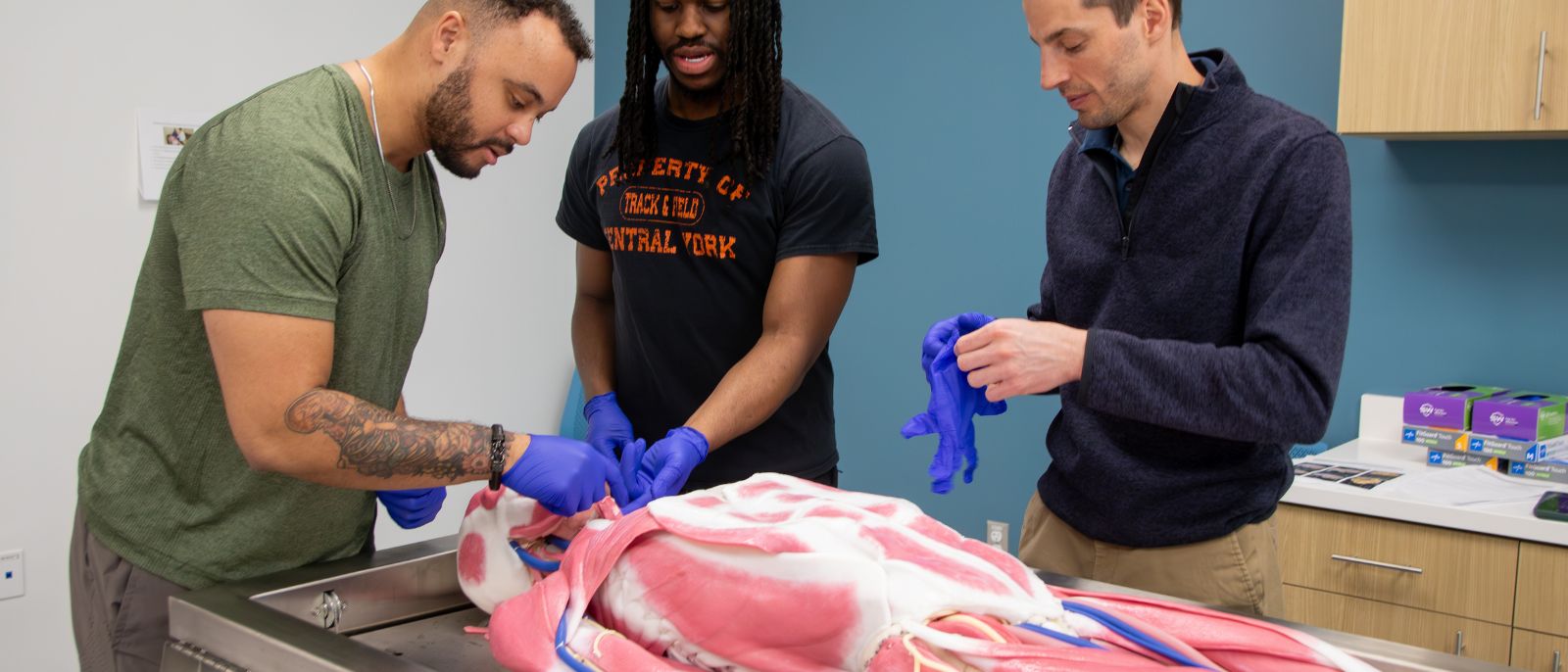
Discover Harrisburg University’s Doctor of Physical Therapy (DPT) program*, a cutting-edge hybrid curriculum designed for diverse learners seeking a flexible, affordable pathway to becoming physical therapists. Our innovative program integrates online learning, simulation, and hands-on, in-person training for comprehensive experiential learning. Perfect for aspiring physical therapists, this hybrid approach combines the convenience of online education with essential in-person skill development. Join Harrisburg University and begin your career as a physical therapist.
Curriculum
Our curriculum is designed to provide a comprehensive and integrated approach to physical therapy education, combining foundational knowledge, clinical skills, and professional development.
Foundational Knowledge and Skills in Year 1 emphasize a systems and lifespan-based learning approach, covering key areas such as Clinical Medicine, Movement Science, Neurological Foundations, Physical Therapy Examination and Rehabilitation Principles, and Evidence-Informed Practice. This solid foundation prepares students for advanced coursework and clinical decision-making.
Clinical Skills courses, including Neurological Rehabilitation, Inpatient Rehabilitation, Clinical Medicine, Aging Adult, Pediatrics Musculoskeletal, Orthotics/Prosthetics/Assistive Technology, and Physical Therapy in Primary Care, build on this foundation in Year 2. These courses integrate lifespan and case-based learning approaches to develop the necessary skills for treating a diverse range of patients across the lifespan.
Clinical Application courses, such as Clinical Integration and Clinical Education, utilize a case-based learning model that guides students through increasingly complex scenarios. This prepares them for clinical education experiences during the final two trimesters, where they apply their skills in real-world settings.
Professionalism and leadership courses run throughout the program, applying systems, lifespan, and case-based models to foster continuous professional growth and leadership development in physical therapy practice.
Program Courses
Year 1
DPTH 600 – Culturally Responsive Professionalism in Physical Therapy I (2 credits)
This course is the first of a multi-course series. The course introduces learners to professional development as a physical therapist with emphasis on professional behaviors and actions in accordance with professional core values and the patient/client management model. The focus of this course is to provide the learner with the foundational professional knowledge necessary to engage in the interprofessional healthcare environment and to meet the needs of a diverse human population through their lifespan.
DPTH 602 – Clinical Medicine in Physical Therapy Practice I (4 credits)
This is the first course in a three-course series. This course provides learners with an overview of the clinically relevant anatomy, physiology, and pathophysiology of the musculoskeletal, cardiovascular, respiratory, and nervous systems and the common imaging, lab values, and pharmacology associated with medical management of disease processes that affect these body systems. This course facilitates the learner’s knowledge and understanding of varied diseases and their medical management that is needed to effectively evaluate and safely treat persons with varied medical conditions. Learners will consider the psychological, social, emotional, cultural, and spiritual impact of disease and disability on the client, caregivers, and physical therapy management.
DPTH 604 – Movement Science I (4 credits)
This course is the first course in a 2-course series. This course introduces current concepts in human movement and functional anatomy from a variety of perspectives including biomechanics, kinematics and kinetics to explore normal mechanics of functional movement. Offered Fall semester, annually.
DPTH 606 – Evidence Informed Physical Therapy Practice I (2 credits)
This course introduces evidence-informed practice in physical therapy. The focus of the course is the exploration of scientific research as a basis for clinical practices, including critical appraisal of quantitative and qualitative studies. The course explores medical ethics, the role of institutional review boards, and the NIH guidelines for the protection of human subjects. Learners gain insight into the intersection of evidence-informed clinical application with professionalism, and the ethical and legal parameters of healthcare.
DPTH 610 – Physical Therapy Exam and Rehabilitation Principles (4 credits)
This course introduces rehabilitation principles using the patient/client management model and the International Classification of Function (ICF) to guide physical therapy examination and intervention procedures. This course promotes clinical decision making during systems review, examination and the implementation of rehabilitation tests/measures and interventions for persons across the continuum of care and the lifespan of a diverse human population.
DPTH 612 – Clinical Medicine in Physical Therapy Practice II (4 credits)
This is the second course in a three-course series. This course provides learners with an overview of the clinically relevant anatomy, physiology, and pathophysiology of the immune, endocrine, metabolic, integumentary, lymphatic, hematologic, gastrointestinal, hepatic, biliary, pancreatic, and urogenital systems, as well as infectious and oncologic disorders and pregnancy and the common imaging, lab values and pharmacology associated with medical management of these conditions. This course facilitates the learner’s knowledge and understanding of varied diseases and their medical management that is needed to effectively evaluate and safely treat persons with varied medical conditions. Learners will consider the psychological, social, emotional, cultural, and spiritual impact of disease and disability on the client, caregivers, and physical therapy management.
DPTH 614 – Movement Science II (4 credits)
This course is the second in a 2-course series. This course builds on the foundational knowledge that was introduced in DPTH 604 – Movement Science I. The course explores the physics of human movement and the role of the neurological system. Theories of motor control and motor learning are discussed in the context of typical motor development from birth through maturity with considerations for socioeconomic and cultural factors that impact development.
DPTH 622 – Neuroscience Fundamentals in Physical Therapy (3 credits)
This course introduces the learner to the foundations of neuroscience and pathology of the neurological system as it pertains to physical therapy practice. Learners will explore concepts of neuroanatomy and neurophysiology and will apply concepts using case studies to facilitate the integration of foundational science with clinical information.
DPTH 624 – Foundational Cardiovascular and Pulmonary Practice (4 credits)
This course provides the learner with opportunities to explore evidence-based examination, evaluation and skilled intervention delivery for persons with cardiopulmonary disease and dysfunction, with emphasis on the response of the cardiac, circulatory and pulmonary systems to human movement. The learner will explore how physical therapy can maximize function, promote health and wellness, minimize impairments/disease progression, and mitigate the progression of disability related to cardiovascular and respiratory pathology.
DPTH 626 – Musculoskeletal Physical Therapy I (4 credits)
This course reinforces examination and rehabilitation management principles specific to the musculoskeletal system for the lumbar spine and lower body region from an orthopedic physical therapy perspective. Learners are introduced to differential diagnosis for medical referral and methods to coordinate care with other healthcare professionals within a collaborative healthcare environment. This course builds on foundational knowledge of clinical decision-making within the framework of the patient/client management model, promoting the learner’s ability to competently gather data and make decisions to guide a plan of care in a culturally responsive manner. Laboratory sessions explore the examination, evaluation, and evidence-informed interventions needed to competently treat patients across the lifespan of a diverse human population.
DPTH 628 – Integrated Clinical Experience I (1 credit)
This course blends clinical interactions with reflective learning activities to introduce foundational patient care activities in the clinical setting with a focus on patient/ client interaction, interdisciplinary communication, and professional behaviors. Observations will occur under the supervision of a Clinical Instructor.
Program Courses
Year 2
DPTH 700 – Culturally Responsive Professionalism in Physical Therapy II (1 credit)
This is the second course in the Culturally Responsive Professionalism series. This course builds upon professional behaviors for the delivery of just, equitable, and inclusive healthcare to a diverse human population including professional communication through the ICF model and clinical documentation. This course provides the foundation for legal and ethical documentation and billing practices for a variety of healthcare settings.
DPTH 702 – Neuromuscular Rehabilitation (4 credits)
This course focuses on neuromuscular evaluation elements, examination procedures and interpretation of evidenced-based measurement tools and test batteries commonly used by the physical therapist for assessment and intervention for adults with neurological dysfunction. The patient/client management and International Classification of Functioning, Disability and Health (ICF) models provide the framework for this course. Learners apply assessment skills and evidence-based interventional strategies within the context of specific neurologic impairments and diagnoses to develop, implement and assess a holistic plan of care. Laboratory activities emphasize a patient-oriented approach and provide meaningful exposure and continued mastery of selected interventions that are indicated when treating persons with neurological conditions.
DPTH 704 – Clinical Integration of Physical Therapy Principles I (3 credits)
The Clinical Integration Course Series provides a systematic progression of the requisite physical therapy evaluative, assessment, intervention and monitoring skills needed to become a practicing clinician capable of effectively evaluating and treating persons across the lifespan and throughout the continuum of care. The courses utilize a case-based approach and require the learner to integrate prior coursework to demonstrate effective examination, evaluation and intervention skills for patients with varying degrees of complexity. The courses progress by assessment-based milestones to ensure learners are deemed competent with fundamental physical therapy skills prior to final year clinical experiences.
DPTH 706 – Musculoskeletal Physical Therapy II (4 credits)
This course reinforces examination and rehabilitation management principles specific to the musculoskeletal system for the cervical and thoracic spine and upper body region from an orthopedic physical therapy perspective. Learners are introduced to differential diagnosis for medical referral and methods to coordinate care with other healthcare professionals within a collaborative healthcare environment. This course builds on foundational knowledge of clinical decision-making within the framework of the patient/client management model, promoting the learners ability to competently gather data and make decisions to guide a plan of care in a culturally responsive manner. Laboratory sessions explore the examination, evaluation, and evidence-informed interventions needed to competently treat patients across the lifespan of a diverse human population.
DPTH 710 – Physical Therapy within the Inpatient Continuum of Care (3 credits)
The learner will experience an in-depth study of the role of the physical therapist within the inpatient continuum of care, with an emphasis on person centered care, clinical decision-making, development of an appropriate plan of care, goal setting and treatment design, interdisciplinary communication and collaboration, and discharge planning with a focus on maximizing patient outcomes (leveraging resources and in consideration of all ICF factors).
DPTH 712 – Orthotics, Prosthetics, and Assistive Technology in Healthcare (2 credits)
This is a course designed to instruct learners in the physical therapy examination, evaluation, and interventions for individuals with orthotic, prosthetic or assistive technology (AT) needs. Learners will apply biomechanical principles and neurologic considerations into the orthotic/prosthetic/AT selection and management process for patients in a variety of healthcare settings. Emphasis will be placed on lower extremity orthoses/prosthesis/assistive technologies in consideration of environmental and social factors that can impact decision-making across the lifespan of a diverse human population. Lab experiences will provide experiential learning with fit and function of orthoses, prosthetics, assistive technologies and orthotic fabrication techniques.
DPTH 714 – Clinical Integration of Physical Therapy Principles II (3 credits)
The Clinical Integration Course Series provides a systematic progression of the requisite physical therapy evaluative, assessment, intervention and monitoring skills needed to become a practicing clinician capable of effectively evaluating and treating persons across the lifespan and throughout the continuum of care. The courses utilize a case-based approach and require the learner to integrate prior coursework to demonstrate effective examination, evaluation and intervention skills for patients with varying degrees of complexity. The courses progress by assessment-based milestones to ensure learners are deemed competent with fundamental physical therapy skills prior to final year clinical experiences.
DPTH 716 – Evidence Informed Physical Therapy Practice II (2 credits)
This course is the second course in the series. The learner expands their ability for critical appraisal of research and application to clinical practice. In this course, the learner further integrates their knowledge of ethical decision-making, professionalism, and legal clinical practice in the healthcare setting with evidence-informed patient/client management. Upon completion of this course, the learner demonstrates an understanding of the skills, methods, and knowledge of a physical therapist to solve a problem or answer a question representative of the role of physical therapy in creating a just, equitable, and inclusive society.
DPTH 718 – Integrated Clinical Experience II (1 credit)
This course blends clinical interactions with reflective learning activities to reinforce foundational patient care activities in the clinical setting with a focus on patient/ client interaction, interdisciplinary communication, and professional behaviors. Learners will critically appraise literature related to an observed clinical intervention or examination technique. Observations will occur under the supervision of a Clinical Instructor.
DPTH 720 – Culturally Responsive Professionalism in Physical Therapy III (2 credits)
This is the third course in the Culturally Responsive Professionalism series. This course connects involvement in the APTA and advocacy to professional development. The course expands the concepts of professional behaviors and includes discussion of ethics in practice and laws that promote justice, equity and inclusion in health for a diverse human population across their lifespan.
DPTH 722 – Clinical Medicine in Physical Therapy Practice III (2 credits)
This is the third course in a three-course series. This course uses a case-based approach to facilitate the learners clinical decision-making as it relates to the physical therapy examination, evaluation and treatment of persons with varied medical conditions and co-morbidities. Learners will consider the psychological, social, emotional, cultural, and spiritual impact of disease and disability on the client, caregivers and physical therapy management.
DPTH 724 – Clinical Integration of Physical Therapy Principles III (3 credits)
The Clinical Integration Course Series provides a systematic progression of the requisite physical therapy evaluative, assessment, intervention and monitoring skills needed to become a practicing clinician capable of effectively evaluating and treating persons across the lifespan and throughout the continuum of care. The courses utilize a case-based approach and require the learner to integrate prior coursework to demonstrate effective examination, evaluation and intervention skills for patients with varying degrees of complexity. The courses progress by assessment-based milestones to ensure learners are deemed competent with fundamental physical therapy skills prior to final year clinical experiences.
DPTH 726 – Pediatric Physical Therapy Practice (3 credits)
This course presents an introduction to the physical therapy management of children from birth to 21 years of age to effectively provide physical therapy care to pediatric patients across the continuum of care, while considering the biopsychosocial, environmental, and economic factors that may impact the effectiveness of care delivery. Learners will apply the components of physical therapy screening, examination, evaluation, diagnosis, prognosis, plan of care, intervention, outcomes assessment and evaluation to selected case studies representing the broad variation in medical complexity associated with treatment of pediatric patients. The learners will explore the effect of public policy and varied healthcare models on access to care and functional outcomes for pediatric patients. This course emphasizes evidence-based interventions that encourage application of prevention, wellness, and health promotion education, regardless of level of ability.
DPTH 728 – Physical Therapy for the Aging Adult (2 credits)
This course provides learners opportunities to explore evidence-based examination, evaluation, and skilled intervention delivery for the aging adult across the continuum of care, while considering the biopsychosocial, environmental and economic factors that may impact the effectiveness of care delivery. This course emphasizes prevention, wellness, health promotion interventions/education, and inclusion of treatment interventions of adequate intensity to maximize functional performance for the aging adult population. The learners will explore the effect of public policy and varied healthcare models on access to care and functional outcomes for the aging adult, and they will construct and participate in a healthcare related advocacy activity to enhance an aging-related experience for this population.
Program Courses
Year 3
DPTH 800 – Leadership and Health Informatics in Physical Therapy Practice (3 credits)
This course expands upon concepts in the Culturally Responsive Professionalism series. The course connects the role of the physical therapist to the organization, management, and leadership activities in the healthcare system and explores the use of data to meet quality, regulatory, and key performance indicators of healthcare management. The learner connects human resource activities, customer service, and other business practices to positive outcomes for diverse employees, individuals, and communities.
DPTH 802 – Physical Therapy in Primary Care and Prevention (2 credits)
This course examines the role of the physical therapist as a primary care provider within the healthcare team. This course explores various domains and influences of health and
identifies appropriate screening and testing procedures, culminating in individual patient and community interventions. This course explores the relationship between social determinants of health and culturally competent healthcare, wellness, and education. Learners will advocate for just, equitable, and inclusive health through preventative care, medical screening, and interprofessional collaboration, while practicing the psychosocial skills necessary for an autonomous doctoring profession.
DPTH 804 – Clinical Integration of Physical Therapy Principles IV (2 credits)
The Clinical Integration Course Series provides a systematic progression of the requisite physical therapy evaluative, assessment, intervention and monitoring skills needed to become a practicing clinician capable of effectively evaluating and treating persons across the lifespan and throughout the continuum of care. The courses utilize a case-based approach and require the learner to integrate prior coursework to demonstrate effective examination, evaluation and intervention skills for patients with varying degrees of complexity. The courses progress by assessment-based milestones to ensure learners are deemed competent with fundamental physical therapy skills prior to final year clinical experiences. The final course in the series is a comprehensive review and comprehensive practical exam designed to measure competency and enhance experiential learning to prepare learners for clinical experiences.
DPTH 806 – Service Learning in Physical Therapy (1 credit)
This course focuses on applying just, equitable, and inclusive community engagement to promote health and wellness for a diverse human population across their lifespan.
DPTH 810 – National Physical Therapy Exam Review (1 credit)
This course prepares learners for all aspects of taking the National Physical Therapy Examination upon completion of all coursework. This course leverages a variety of modalities, including practice examinations, coaching, and reflection activities to improve the learners knowledge base and test taking skills.
DPTH 816 – Clinical Experience in Physical Therapy I (4 credits)
This course provides the first full-time, clinical education experience with a supervising Clinical Instructor. Learners will build upon the elements of patient/client management in the clinical setting. The learners professionalism and progress towards competency as an entry-level clinician will be evaluated through a standardized tool. Learners will reflect and explore components of clinical practice through structured learning activities. The learner will apply evidence informed practice to generate a case-based presentation as culmination of this learning experience.
DPTH 818 – Clinical Experience in Physical Therapy II (4 credits)
This course provides the second full-time, clinical education experience with a supervising Clinical Instructor. Learners will build upon the elements of patient/client management in the clinical setting. The learners professionalism and progress towards competency as an entry-level clinician will be evaluated through a standardized tool. Learners will reflect and explore components of clinical practice through structured learning activities. The learner will apply evidence informed practice to generate a case-based presentation as culmination of this learning experience.
DPTH 820 – Physical Therapy Capstone (1 credit)
Course activities facilitate the learners application of evidence-informed practice, legal and ethical decision-making, and professionalism in clinical practice. The course emphasizes the role of the physical therapist in creating a just, equitable, and inclusive society. The learner will develop and complete an individualized project that will culminate in a final Capstone Project.
DPTH 826 – Clinical Experience in Physical Therapy III (4 credits)
This course provides a terminal full-time, clinical education experience with a supervising Clinical Instructor. Learners will work to demonstrate mastery of the elements of patient/client management in the clinical setting through evaluation using a standardized tool. Learners will reflect and explore components of clinical practice through structured learning activities. The learner will apply evidence informed practice to generate a case-based presentation as culmination of this learning experience.
DPTH 828 – Clinical Experience in Physical Therapy IV (4 credits)
This course provides a terminal full-time, clinical education experience with a supervising Clinical Instructor. Learners will work to demonstrate mastery of the elements of professional behaviors and patient/client management in the clinical setting through evaluation using a standardized tool. Learners will reflect and explore components of clinical practice through structured learning activities. The learner will apply evidence informed practice to generate a case-based presentation as culmination of this learning experience. Offered Summer semester, annually.
Would you like to connect to someone 1 on 1?
* Notice of Accreditation Status
Graduation from a physical therapist education program accredited by the Commission on Accreditation in Physical Therapy Education (CAPTE), 3030 Potomac Ave., Suite 100, Alexandria, Virginia 22305-3085; phone; 703-706-3245; accreditation@apta.org is necessary for eligibility to sit for the licensure examination, which is required in all states.
Candidacy is considered to be an accredited status, as such the credits and degree earned from a program with Candidacy status are considered, by CAPTE, to be from an accredited program. Therefore, students in the charter (first) class should be eligible to take the licensure exam even if CAPTE withholds accreditation at the end of the candidacy period. That said, it is up to each state licensing agency, not CAPTE, to determine who is eligible for licensure. Information on licensing requirements should be directed to the Federation of State Boards of Physical Therapy (FSBPT;www.fsbpt.org) or specific state boards (a list of state boards and contact information is available on FSBPT’s website.
Effective October 29, 2025, the Harrisburg University of Science and Technology DPT Program has been granted Candidate for Accreditation status by the Commission on Accreditation in Physical Therapy Education (3030 Potomac Ave., Suite 100, Alexandria, Virginia 22305-3085; phone: 703-706-3245; email: accreditation@apta.org). If needing to contact the program/institution directly, please call Tonya Y Miller PT, DPT, PhD (717-901-5100 ext. 1630) or email tmiller2@HarrisburgU.edu. Candidate for Accreditation is an accreditation status of affiliation with the Commission on Accreditation in Physical Therapy Education that indicates the program may matriculate students in technical/professional courses. Achievement of Candidate for Accreditation status does not assure that the program will be granted Initial Accreditation.