
Skip to content

Program Overview

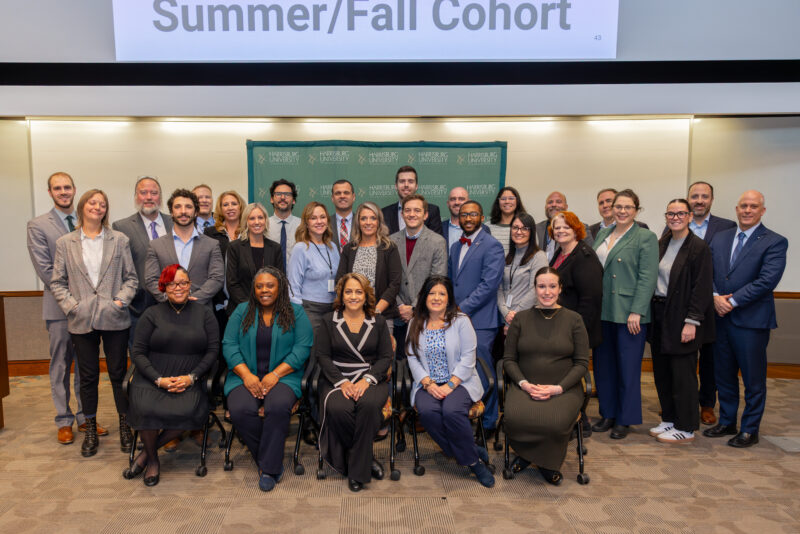
leadership group

The Senior Leadership Development Program is a structured, cohort-based experience designed for Commonwealth of Pennsylvania employees at pay scale 11 and above. The program brings together leaders from across agencies to build advanced leadership capabilities aligned with the evolving needs of state government. Through a series of eight modules, participants explore key areas including strategic leadership, communication and public affairs, change management, workforce strategy, innovation, and resource alignment. Each session is designed to connect directly to the realities of public sector leadership, with an emphasis on cross-agency collaboration and practical application.

Participants engage in a blend of facilitated instruction, peer learning, and real-world application. The program incorporates a 360-degree assessment, individual coaching sessions, and structured reflection to support ongoing development throughout the experience. Participants are expected to apply concepts between sessions within their own roles, reinforcing learning through practical use. This approach ensures that development is continuous and grounded in the day-to-day responsibilities of leading within the Commonwealth.


Who Should Attend

The Senior Leadership Development Program (SLDP) is intended for Commonwealth employees in Pay Scale Group (PSG) 11 and above, or the equivalent, whose leadership responsibilities have strategic impact across an agency, function, program, or statewide initiative. The program is specifically designed for senior-level leaders whose roles require broad decision-making authority, organizational influence, and accountability for outcomes.


Benefits of Program

The Senior Leadership Development Program is designed to do more than build leadership awareness. It strengthens the Commonwealth’s capacity to lead through complexity, drive transformation, and deliver results for citizens. By focusing on strategic leadership, cross-agency collaboration, and real-world application, the program equips senior leaders to move beyond managing day-to-day operations and instead shape systems, influence outcomes, and align resources to statewide priorities. Participants gain practical tools and frameworks they can immediately apply to pressing challenges, from workforce development to service delivery and digital modernization.

What sets this program apart is its integrated approach to growth. Through a combination of 360-degree feedback, targeted coaching, and applied learning, participants receive continuous insight into how their leadership is experienced by others and how it evolves over time. This creates measurable behavior change, not just knowledge acquisition. As leaders strengthen their ability to communicate, lead change, and make strategic decisions, the impact extends beyond the individual to their teams, agencies, and the communities they serve. The result is a stronger, more aligned leadership bench prepared to navigate the future of government with confidence and clarity.

Curriculum/Learning Methods

The program curriculum is based around case studies, team projects, role playing and scenario planning.

Classes offer a “safe space” for senior leaders to discuss issues they may face in their positions while promoting inter-organizational collaboration.

Program Format

All classes take place in-person at Harrisburg University in Harrisburg, PA

It is expected that all students attend class in-person on all class dates.

45-50 hours

Class time is 8:30 am – 12:30 pm, except where otherwise noted (Module 1 and Module 8 are extended sessions)

Module Topics

Note: Exact order of Module Topics subject to change based on speaker availability

Module 1: FULL DAY, 8:30 am – 3:00 pm

  1. 360 Assessment and Program Framework
    • Facilitated 360 debrief session
    • Participants create a Leadership Growth Plan (1-page):
      • Key strengths to leverage
      • Development goals tied to program modules
      • Real workplace application focus
  2. Strategic Leadership in Government Systems
  • What distinguishes a strategic vs. operational leader
    • Systems thinking across agencies
    • Leading through ambiguity and competing priorities

  • 360 Focus: Strategic thinking, decision-making, big-picture leadership
    • Participants review feedback related to strategic vs. tactical tendencies
    • Reflection: Where am I operating too tactically?
    • Action: Identify one opportunity to elevate thinking to a systems-level decision

Module 2: Resilient Leadership and Executive Mindset

  • Decision-making under pressure and public scrutiny
  • Managing burnout (self + teams)
  • Executive presence and composure

  • 360 Focus: Composure, adaptability, leadership presence
    • Participants connect feedback on stress response and executive presence
    • Reflection: How do others experience me under pressure?
    • Action: Practice one visible behavior shift (e.g., pausing, reframing, delegation)

Module 3: Strategic Communication and Public Affairs

  • Message mapping for internal and external audiences
  • Communicating with legislators, media, and stakeholders
  • Crisis communication and trust-building

  • 360 Focus: Communication effectiveness, influence, listening
    • Participants analyze feedback on clarity, trust-building, and influence
    • Activity: Apply message mapping to a real issue tied to their role
    • Peer feedback aligned to 360 themes

Module 4: Leading Change and Stakeholder Alignment

  • Moving beyond theory – executing change in government
  • Stakeholder mapping and resistance management
  • Leading cross-agency initiatives

  • 360 Focus: Change leadership, collaboration, stakeholder engagement
    • Participants review feedback on how they lead (or resist) change
    • Reflection: Where might I unintentionally create resistance?
    • Action: Map stakeholders for a real initiative and adjust approach

Module 5: Conflict Resolution, Negotiation, and Influence

  • Negotiating across agencies and priorities
  • Influencing without authority
  • Managing political and organizational tension
  • 360 Focus: Conflict management, diplomacy, influence
    • Participants connect feedback to how they handle tension and disagreement
    • Activity: Practice negotiation scenarios tied to real workplace challenges
    • Peer coaching based on 360 insights

Module 6: Budgeting and Strategic Resource Management

  • Using the budget as a strategic tool to align priorities, policy, and outcomes
  • Navigating the Commonwealth budget process and making trade-off decisions under constraint
  • Allocating resources for impact: workforce, technology, and program investments

  • 360 Focus: Decision-making, prioritization, accountability
    • Participants connect feedback to resource allocation and strategic thinking
    • Reflection: How do my decisions signal priorities to others?
    • Action: Align a current budget or resource decision to strategic outcomes

Module 7: Leading People, Culture, and Workforce Strategy

  • Leading multi-generational and unionized workforces
  • Talent pipelines, retention, and succession planning
  • Choosing and developing managers vs. technical experts

  • 360 Focus: Team leadership, trust, development of others
    • Participants review feedback from direct reports and peers
    • Reflection: What is it like to be led by me?
    • Action: Build a team-level leadership adjustment plan

Module 8: Innovation and Transformation in the Public Sector

  • Driving innovation within constraints: balancing risk, compliance, and public accountability
  • Leading digital transformation initiatives (AI, data, and service modernization)
  • Creating a culture of experimentation, continuous improvement, and cross-agency collaboration

  • 360 Focus: Innovation mindset, risk tolerance, adaptability
    • Participants examine feedback on openness to new ideas and change
    • Reflection: Do I enable or unintentionally block innovation?
    • Action: Identify one innovation or transformation effort to champion

Preparation

Pre-program: VIRTUAL

  • Participants complete a 360 assessment aligned to program competencies
  • Feedback collected from supervisor, peers, direct reports, and self
  • Each participant identifies:
    • 2 priority leadership growth goals
    • Key behavior shifts

Coaching & Mentoring

Program participants are divided in teams.

Each team is assigned a mentor/coach.

The mentor/coach meets (in-person and/or virtually) with the team at least once collectively and at least once with each program participant individually.

Coaching session dates, times, and locations will be determined between the assigned mentees and coach.

Expectations & Class Attendance Policy

Attendance at a minimum of 90% of the sessions is required in order to receive a certificate of completion of the program.

Certificate of Completion

This program is a non-degree, non-credit bearing course.

A Certificate of Completion is awarded at the end of the program.

Awarding of a certificate of completion will be based on a pass-fail assessment of the program’s curriculum, attendance, and class requirements.

Materials

The following materials are included in the cost of the course:

  • PDF versions of slides presented (when available)
  • Speaker bios (when available)

Program Fee

2026-2027 Program Fee* per person:

Commonwealth of Pennsylvania: $2,750.00

*Fee is not required at time of application; applicants that are accepted into the program will be provided with an invoice shortly after notification of acceptance.

Application Process

Application Deadline: Monday, July 27, 2026

Candidate Application

Candidates will complete an application form to present their learning goals, past experiences, expertise, and knowledge they will bring to the cohort for consideration.  [CLICK ON “APPLY NOW” AT THE BOTTOM OF THIS PAGE]

Acceptance Notification

Applicants will be notified by Friday, July 31, regarding their acceptance status. At that time, those accepted will receive full course details and orientation information.

See the specific deadlines under “Next Cohort” at the bottom of the page.

Next Cohort – August 6, 2026 – April 15, 2027

Apply Now

If you are interested in applying for a future cohort, please email ProfessionalED@HarrisburgU.edu to be added to our mailing list to receive updates and announcements.

NOTE: ALL DATES WILL TAKE PLACE IN-PERSON AT HARRISBURG UNIVERSITY, 326 MARKET STREET, HARRISBURG, PA

*Exact order of Module Topics subject to change based on speaker availability

Module #/Topic*
Date
Time
Orientation Thursday,

August 6, 2026


1:30 PM – 4:00 PM
Module 1

  1. 360 Assessment and Program Framework
  2. Strategic Leadership in Government Systems


Thursday,

August 27, 2026


8:30 AM – 3:30 PM
Module 2  – Resilient Leadership and Executive Mindset
Thursday,

October 1, 2026


8:30 AM – 12:30 PM
Module 3 – Strategic Communication and Public Affairs
Thursday,

November 5, 2026


8:30 AM – 12:30 PM
Module 4 – Leading Change and Stakeholder Alignment
Thursday,

December 10, 2026


8:30 AM – 12:30 PM
Module 5 – Conflict Resolution, Negotiation, and Influence
Thursday,

January 14, 2026


8:30 AM – 12:30 PM
Module 6 – Budgeting and Strategic Resource Management Thursday,

February 18, 2026


8:30 AM – 12:30 PM
Module 7 –Leading People, Culture, and Workforce Strategy
Thursday,

March 18, 2026


8:30 AM – 12:30 PM
Module 8 (+ Year in Review + Graduation) – Innovation and Transformation in the Public Sector Thursday,

April 15, 2025


8:00 AM – 5:00 PM


Format & Location:

All classes will take place in-person at Harrisburg University of Science and Technology, 326 Market Street, Harrisburg, PA 17101

Class Time*:

8:30 am – 12:30 pm

**EXCEPT where noted for Module 1 and Module 8 – see chart with dates for more information

Application Deadline: Monday, July 27, 2026

Application Status/Notification: On/by: Friday, July 31, 2026

All applicants will be notified of their acceptance or non-acceptance into the program by this date

Contact:

Professional Education – ProfessionalEd@harrisburgu.edu


Testimonials
2024 Spring LDP Graduate

This program has been invaluable to me as a new manager. Like we’ve talked about, you can have a certain skillset, be a good employee, etc., and then find yourself in a position that requires so much more of you in terms of leadership. That can be a pretty daunting feeling… the LDP experience has equipped me with skills, and equally as valuable, a network of other leaders to rely on and learn from and with. It’s also provided me with a space to find/create confidence in myself as a leader. We aren’t often given time to ponder what sort of leader we want to be, what our style is, and what steps would be necessary to get there, but with LDP we have permission and safe space to suspend most everything else for those four hours every other week and truly focus on learning, growing, networking, and gaining self-awareness. I’m beyond grateful.

2023 Summer LDP Graduate

“LDP taught me not only skills about leadership vs. management, resilience and an adaptation and conflict resolution – it taught me about leadership and growth.”

2023 Summer LDP Graduate

“Going through the program, it provided tools to help assist me in building that within my team.  I appreciate being given the opportunity to be part of the program and look forward to utilizing the tools to become a better leader for my team within my agency and also for myself.”

2023 Summer LDP Graduate

“This program has helped me identify and develop my strengths as a data nerd who likes to try new things, and how I can better contribute to the mission of the Department of Corrections and the Commonwealth as a whole.”

ADA Statement: HU is committed to providing equal education opportunity and full participation for persons with disabilities. It is HU’s policy that no qualified person be excluded from participating in any HU program or activity, be denied the benefits of any HU program or activity, or otherwise be subject to discrimination regarding any HU program or activity. Should you potentially require an accommodation under the ADA to participate in this program, please email ProfessionalEd@HarrisburgU.edu. Please send your request for an accommodation at least 5 business days in advance of the event or program.