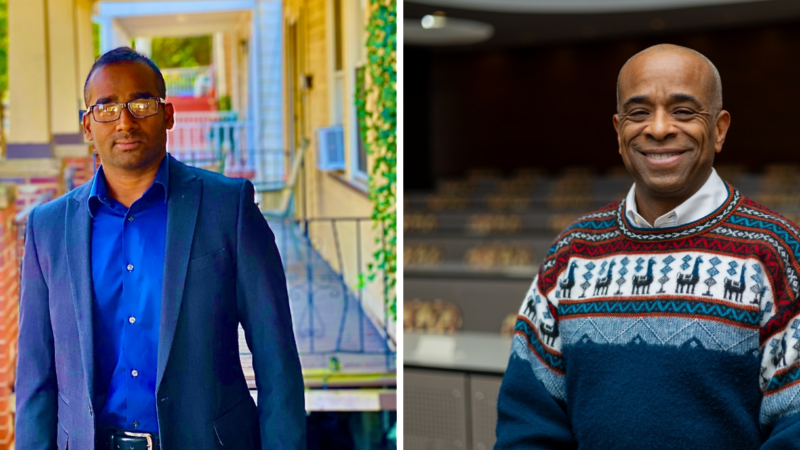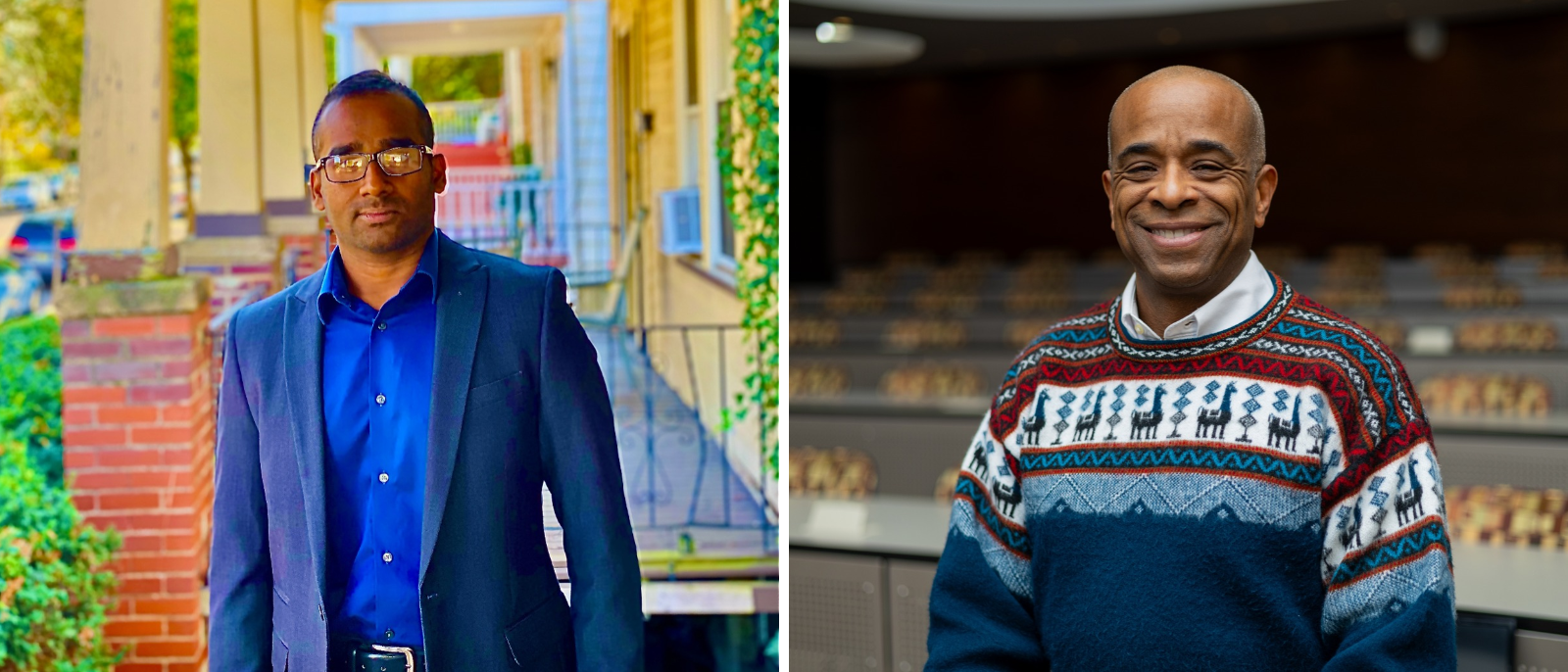
HARRISBURG, PA — Shanmukha Satujoda, a candidate in the Data Sciences Ph.D. program at Harrisburg University of Science and Technology (HU), and Kevin Huggins, Ph.D., professor of computer and data science (since retired), have published a paper in the journal Vehicles as part of its special issue “Vehicle Design Processes, 3rd Edition.”
Their paper, “Staged GT3 Setup Optimization with Setup-Conditioned Telemetry Response Modeling in Simulation,” lays out a data-driven framework for tuning a race car in simulation. Working with a virtual BMW Z4 GT3 in the Assetto Corsa racing simulator, the researchers tested 134 setup configurations on the simulator’s version of Austria’s Red Bull Ring. They then used telemetry and machine learning to understand not just whether a setup was faster, but where on the track and how it changed the car’s behavior.
We asked Satujoda, the paper’s lead author, to tell us more.
How would you explain this research at a dinner party?
I would say that we built a data-driven system for tuning a simulated race car. In racing, small setup changes, such as suspension stiffness, ride height, camber, tire pressure, or aero balance, can affect how the car behaves and how fast it completes a lap. Traditionally, those decisions rely heavily on trial and error and expert intuition. Our project used simulation telemetry, machine learning, and optimization to study those setup changes more systematically.
Why did you choose this research?
It sits at the intersection of several things I care deeply about: motorsports, simulation, machine learning, and applied data science. My interest in racing is not only academic; I am also an amateur motorsports enthusiast with a passion for cars, and I have participated in time attack and track driving events myself. That experience gave me firsthand appreciation for how much vehicle setup, driver confidence, and small technical decisions can affect performance.
I have always been fascinated by racing because it is not just about speed. It is about understanding a complex system under pressure. This project gave me a way to combine my technical background with a personal passion and turn it into a rigorous Ph.D. research contribution.
What problem were you trying to solve, and why does it matter?
Race car setup optimization is difficult because many parameters interact with each other in nonlinear ways. A change that helps in one part of the track may hurt performance somewhere else. Instead of only asking, “Did this setup make the lap faster?” we also wanted to use telemetry to understand how setup changes affect the car’s behavior throughout the lap.
That matters because the same type of thinking applies beyond racing as well. Many real-world systems require decisions based on large amounts of high-dimensional data, complex interactions, and noisy outcomes.
Walk us through the data collection process.
The data collection process was probably the least glamorous but most important part of the project. We ran over 100 configurations and collected millions of telemetry data points from the simulator. Every run had to be organized, cleaned, validated, and connected back to the exact setup that produced it.
There were invalid laps, noisy telemetry, inconsistent runs, and many cases where the data had to be carefully checked before it could be used. A large part of the work was not just building models but also building a reliable experimental pipeline.
What surprised you most?
How much information was hidden inside the lap. A lap time is just one number, but the telemetry shows how the car behaves in braking zones, corners, exits, straights, and different track segments. Our setup-conditioned telemetry response model showed that understanding those intermediate behaviors can be more informative than simply mapping setup parameters directly to lap time. That was an important insight for the study.
What was the single most important finding?
The staged setup optimization improved the best Red Bull Ring lap time from 91.430 seconds to 91.040 seconds, a 0.390-second reduction. To a nonexpert, that may sound small, but in racing, a few tenths of a second is a meaningful margin. An improvement of nearly four-tenths of a second could be the difference between starting on the front row of the grid and starting somewhere behind it.
The larger point is that this improvement came from a structured process. The study evaluated 134 setup configurations, processed 585 stable laps, and converted the telemetry into 29,250 track-position segment samples.
What is the main takeaway you hope people get from this work?
That artificial intelligence is most powerful when it helps us understand complex systems, not when it replaces human judgment entirely. In this project, AI was not magically “driving the car” or making unsupported decisions. It was used as a tool to learn from simulation data, identify patterns, test setup hypotheses, and support better engineering decisions.
What’s next?
I would like to build on this research by expanding the framework across more tracks, more vehicle types, and more dynamic race conditions. Work and experiments on cross-circuit transfer metrics are already done. I am also interested in exploring how these methods can connect to reinforcement learning and adaptive setup tuning, where the system could refine decisions based on changing conditions over time. More broadly, I see this work as part of a larger research direction around simulation-based optimization for complex systems.
The full paper is available open access at mdpi.com/2624-8921/8/7/146.
Watch Shanmukha explain his research below or on the Harrisburg University YouTube Channel.
About Harrisburg University
Harrisburg University of Science and Technology (HU) is an independent, nonprofit university in Harrisburg, Pennsylvania, offering degrees in advanced manufacturing, analytics, biotechnology, cybersecurity, nursing, and other STEM fields. Accredited by the Middle States Commission on Higher Education, HU serves a diverse student body through bachelor’s, master’s, and doctoral programs that link research with practical application. Learn more at HarrisburgU.edu or stay in the know by following HU on Facebook, Instagram, LinkedIn, X, and YouTube.
Media Contact
Have questions about this story? Want to line up an interview? Contact Dan Wilhelm, director of communications, at DWilhelm@HarrisburgU.edu.