HARRISBURG, PA (Oct. 15) — As the use of artificial intelligence (AI) continues to expand, so does the infrastructure needed to power it. But while the energy demands of AI data centers receive increasing attention, their full water footprint may be less visible.
Bhavik Shah ’28, a graduate student in Harrisburg University of Science and Technology’s (HU) Master of Science in Project Management program, is conducting independent research on how to measure the water consumption associated with AI data centers.
Bhavik has worked as a water and wastewater staff engineer in Phoenix, Arizona, since before beginning his graduate studies at HU. “That background is part of why I’ve stayed close to water systems even while my degree program itself is focused on project management,” Bhavik said.
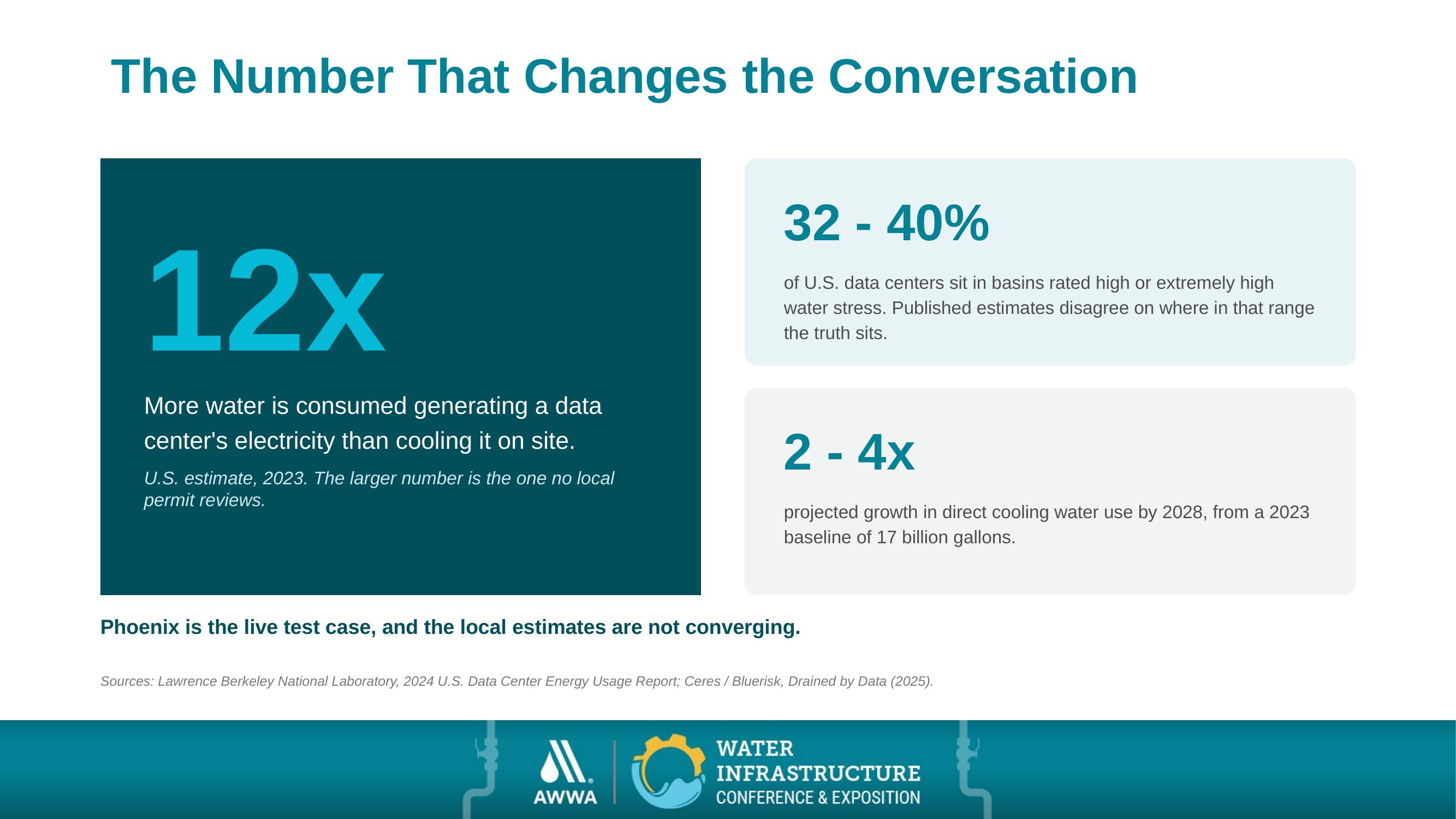
His interest in the research developed after he read news coverage about the growing water and energy demands of AI data centers. He noticed that much of the discussion focused on water used directly at facilities, leaving other significant sources of consumption out of the picture.
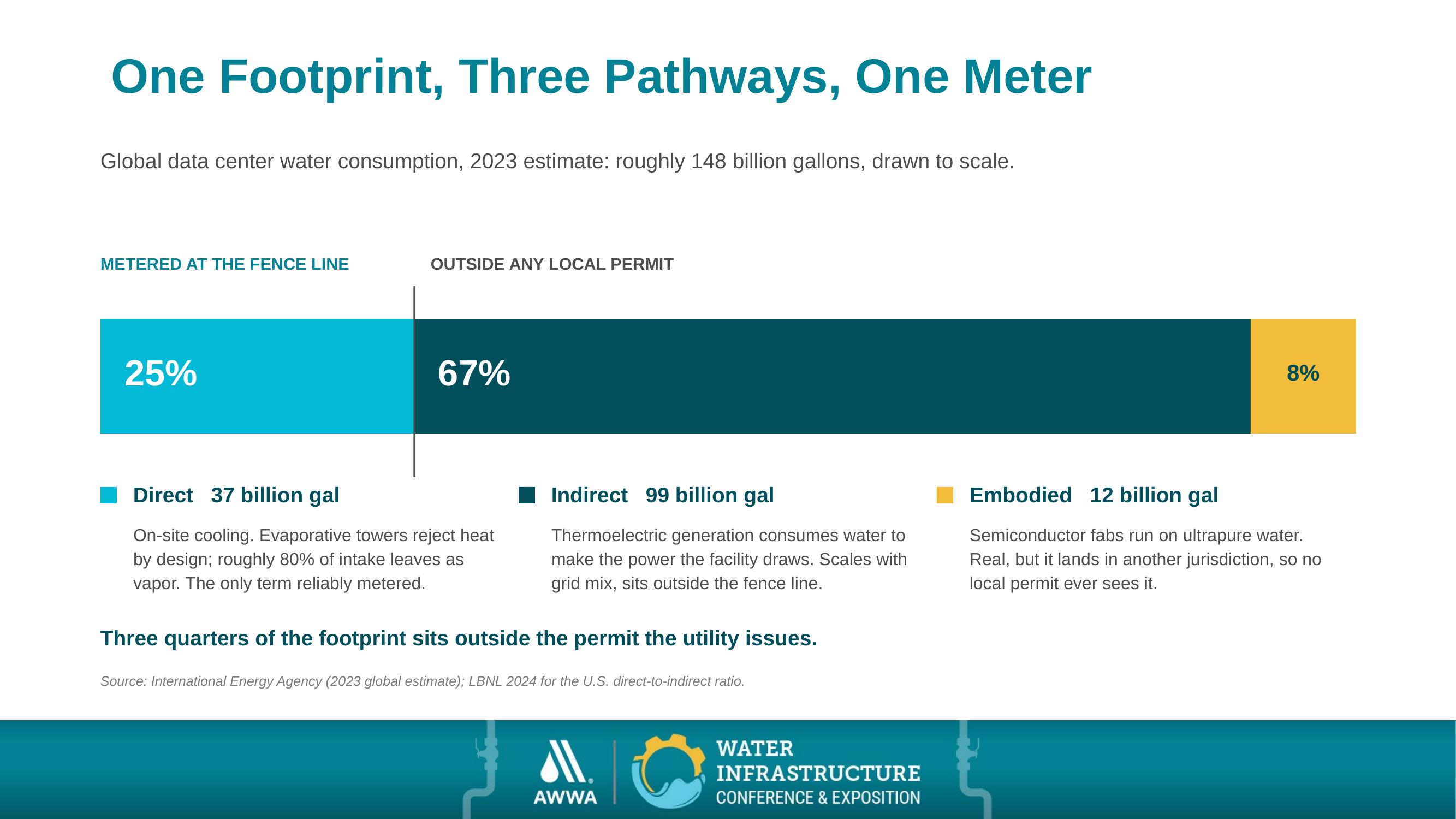
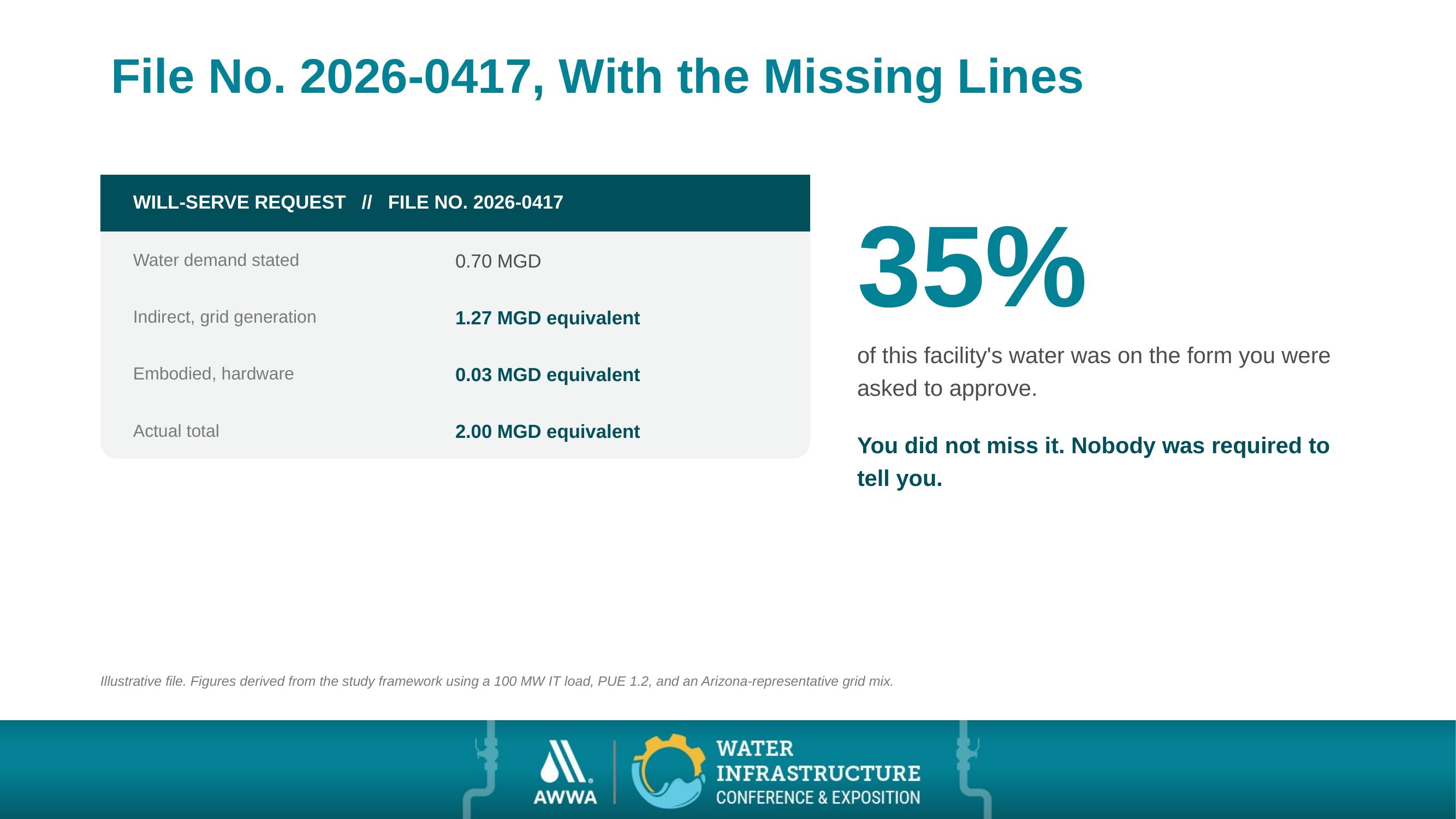
Bhavik’s research proposes a three-part framework for measuring the water footprint of AI data centers: direct on-site cooling, indirect water tied to electricity generation, and the embodied water used to manufacture the hardware required to operate the facilities. By accounting for all three categories, he aims to provide a more complete picture of the resources required to support AI infrastructure.
Bringing the Research to Water Industry Professionals
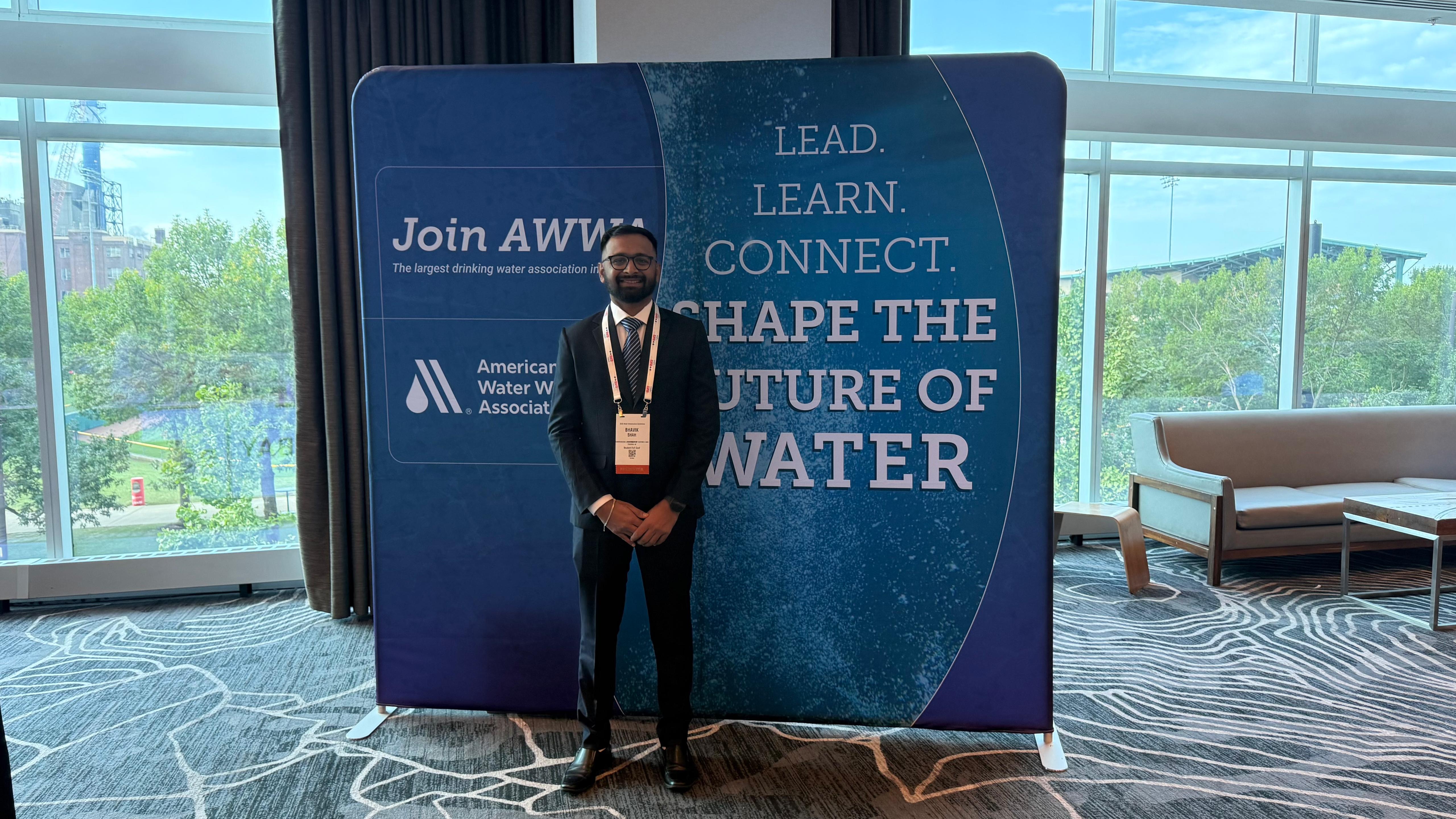
Bhavik presented his research at the American Water Works Association’s (AWWA) Water Infrastructure Conference and Exposition, an opportunity to share his findings with professionals involved in water infrastructure and resource planning.
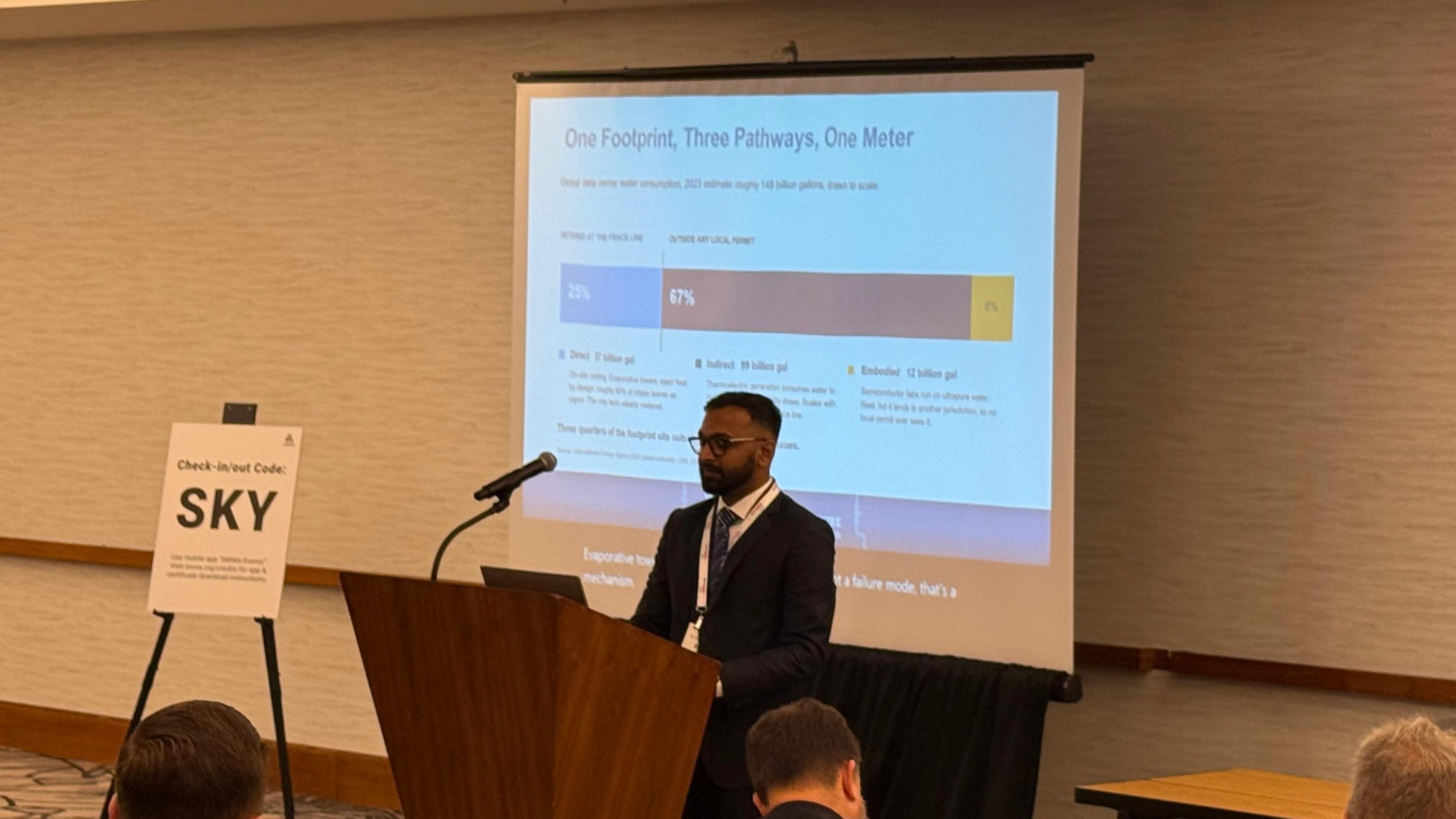
“Once I saw the scope of the conference, it felt like the right venue for this research, since the audience deals with water permitting and planning every day.”
Bhavik hoped attendees would gain a clearer understanding of how much of an AI data center’s water demand may be associated with the electricity needed to operate it, rather than only its on-site cooling systems.
One finding that stood out to Bhavik was a gap in water reporting. According to his research, utility will-serve applications typically account for direct, on-site cooling water, while indirect water consumption associated with electricity generation and embodied water used in hardware manufacturing go undisclosed. “That’s a structural blind spot in how these facilities get permitted and planned around,” he added.
Bhavik’s next steps focus on policy and expanding the data behind his research framework. He is advocating for standardized water reporting, basin-balanced permitting, and closed-loop or zero-liquid-discharge requirements in water-stressed regions.
Pursuing Independent Research Alongside Graduate Studies
Bhavik said HU’s Master of Science in Project Management program has given him the flexibility to pursue the research independently while continuing his studies.
“This has largely been self-directed, unfunded research. That felt like the right way to test what’s possible to investigate independently as a graduate student.”
As AI infrastructure continues to expand, Bhavik’s research highlights the importance of considering the water used throughout the systems that support it, including electricity generation and hardware manufacturing. A more comprehensive understanding of that footprint could help inform future water resource planning and policy decisions.
ABOUT HARRISBURG UNIVERSITY
Harrisburg University of Science and Technology (HU) is an independent, nonprofit university in Harrisburg, Pennsylvania, offering degrees in advanced manufacturing, analytics, biotechnology, cybersecurity, nursing, and other STEM fields. Accredited by the Middle States Commission on Higher Education, HU serves a diverse student body through bachelor’s, master’s, and doctoral programs that link research with practical application. Learn more at HarrisburgU.edu or contact us at Connect@HarrisburgU.edu or 717.901.5146 for more information about HU’s degree and professional development programs. Stay in the know by following Harrisburg University on Facebook, Instagram, LinkedIn, X, and YouTube.
MEDIA CONTACT
Do you have questions about this story? Interested in lining up an interview? Please contact Dan Wilhelm, director of communications, at DWilhelm@HarrisburgU.edu.
# # #